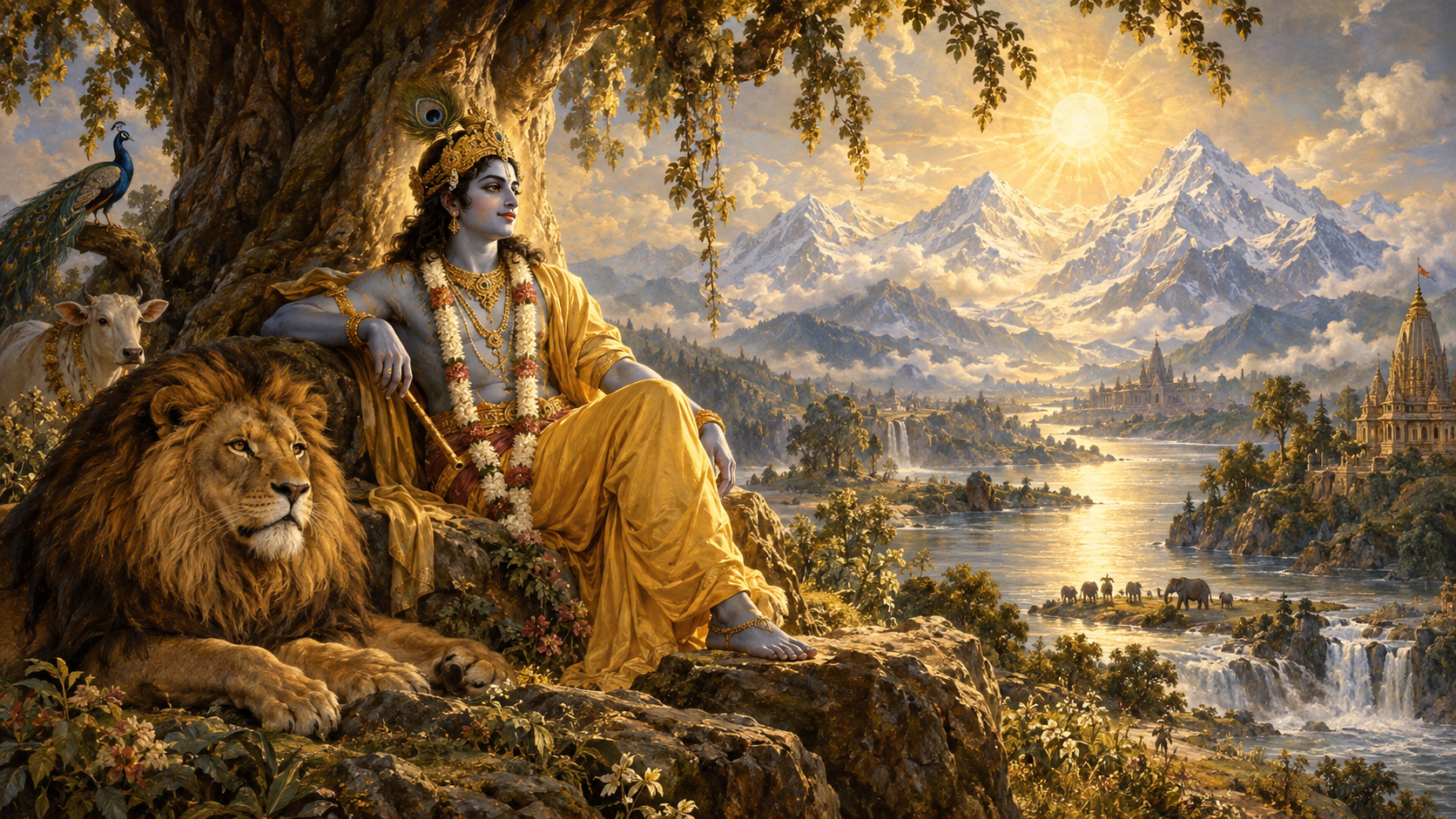
Śrīmad Bhagavad Gītā · Chapter 10
The Divine Glories
vibhūtiyōgaḥ
Hover over a Sanskrit word for a reading note. Click to keep it open.Tap a Sanskrit word for a reading note. Tap again or scroll to close.
ōṃ śrī paramātmanē namaḥ
Om. Salutations to the Supreme Self.
śrībhagavānuvācha
bhūya ēva mahābāhō śṛṇu mē paramaṃ vachaḥ ।
yattē'haṃ prīyamāṇāya vakṣyāmi hitakāmyayā ॥ 1 ॥
The Blessed Lord said:
Again, O mighty-armed, hear thou My supreme word, that, desiring thy welfare, I will declare to thee who art beloved.
na mē viduḥ suragaṇāḥ prabhavaṃ na maharṣayaḥ ।
ahamādirhi dēvānāṃ maharṣīṇāṃ cha sarvaśaḥ ॥ 2 ॥
The multitude of the Shining Ones, or the great Rishis, know not my forthcoming, for I am the beginning of all the Shining Ones and the great Rishis.
yō māmajamanādiṃ cha vētti lōkamahēśvaram ।
asammūḍhaḥ sa martyēṣu sarvapāpaiḥ pramuchyatē ॥ 3 ॥
He who knoweth Me, unborn, beginningless, the great Lord of the world, he among mortals without delusion, is liberated from all sin.
buddhirjñānamasammōhaḥ kṣamā satyaṃ damaḥ śamaḥ ।
sukhaṃ duḥkhaṃ bhavō'bhāvō bhayaṃ chābhayamēva cha ॥ 4 ॥
Reason, wisdom, non-illusion, forgiveness, truth, self-restraint, calmness, pleasure, pain, existence, non-existence, fear, and also courage
ahiṃsā samatā tuṣṭistapō dānaṃ yaśō'yaśaḥ ।
bhavanti bhāvā bhūtānāṃ matta ēva pṛthagvidhāḥ ॥ 5 ॥
Harmlessness, equanimity, content, austerity, almsgiving, fame and obloquy are the various characteristics of beings issuing from Me.
maharṣayaḥ sapta pūrvē chatvārō manavastathā ।
madbhāvā mānasā jātā yēṣāṃ lōka imāḥ prajāḥ ॥ 6 ॥
The seven great Rishis, the ancient Four, and also the Manus, were born of My nature, and mind; of them this race was generated.
ētāṃ vibhūtiṃ yōgaṃ cha mama yō vētti tattvataḥ ।
sō'vikampēna yōgēna yujyatē nātra saṃśayaḥ ॥ 7 ॥
He who knows in essence that sovereignty and yoga of Mine, he is harmonised by unfaltering yoga; there is no doubt thereof.
ahaṃ sarvasya prabhavō mattaḥ sarvaṃ pravartatē ।
iti matvā bhajantē māṃ budhā bhāvasamanvitāḥ ॥ 8 ॥
I am the Generator of all; all evolves from Me; understanding thus, the wise adore Me in rapt emotion.
machchittā madgataprāṇā bōdhayantaḥ parasparam ।
kathayantaścha māṃ nityaṃ tuṣyanti cha ramanti cha ॥ 9 ॥
Mindful of Me, their life hidden in Me, illumining each other, ever conversing about Me, they are content and joyful.
tēṣāṃ satatayuktānāṃ bhajatāṃ prītipūrvakam ।
dadāmi buddhiyōgaṃ taṃ yēna māmupayānti tē ॥ 10 ॥
To these, ever harmonious, worshipping in love, I give the yoga of discrimination by which they come unto Me.
tēṣāmēvānukampārthamahamajñānajaṃ tamaḥ ।
nāśayāmyātmabhāvasthō jñānadīpēna bhāsvatā ॥ 11 ॥
Out of pure compassion for them, dwelling within their Self, I destroy the ignorance-born darkness by the shining lamp of wisdom.
arjuna uvācha
paraṃ brahma paraṃ dhāma pavitraṃ paramaṃ bhavān ।
puruṣaṃ śāśvataṃ divyamādidēvamajaṃ vibhum ॥ 12 ॥
Arjuna said:
Thou art the supreme Eternal, the supreme Abode, the supreme Purity, eternal divine man, primeval Deity, unborn, the Lord!
āhustvāmṛṣayaḥ sarvē dēvarṣirnāradastathā ।
asitō dēvalō vyāsaḥ svayaṃ chaiva bravīṣi mē ॥ 13 ॥
All the Rishis have thus acclaimed Thee, as also the divine Rishi, Nârada; so Asita, Devala, and Vyâsa; and now Thou Thyself tellest it me.
sarvamētadṛtaṃ manyē yanmāṃ vadasi kēśava ।
na hi tē bhagavanvyaktiṃ vidurdēvā na dānavāḥ ॥ 14 ॥
All this I believe true that Thou sayest to me, O Keshava. Thy manifestation, O Blessed Lord, neither Shining Ones nor Dânavas comprehend.
svayamēvātmanātmānaṃ vēttha tvaṃ puruṣōttama ।
bhūtabhāvana bhūtēśa dēvadēva jagatpatē ॥ 15 ॥
Thyself indeed knowest Thyself by Thyself, O Purushottama; Source of beings, Lord of beings, Shining One of Shining Ones, Ruler of the world!
vaktumarhasyaśēṣēṇa divyā hyātmavibhūtayaḥ ।
yābhirvibhūtibhirlōkānimāṃstvaṃ vyāpya tiṣṭhasi ॥ 16 ॥
Deign to tell without reserve of Thine own divine glories, by which glories Thou remainest, pervading these worlds.
kathaṃ vidyāmahaṃ yōgiṃstvāṃ sadā parichintayan ।
kēṣu kēṣu cha bhāvēṣu chintyō'si bhagavanmayā ॥ 17 ॥
How may I know thee, O Yogi, by constant meditation? In what, in what aspects art Thou to be thought of by me, O blessed Lord?
vistarēṇātmanō yōgaṃ vibhūtiṃ cha janārdana ।
bhūyaḥ kathaya tṛptirhi śṛṇvatō nāsti mē'mṛtam ॥ 18 ॥
In detail tell me again of Thy yoga and glory, O Janardana; for me there is never satiety in hearing thy life-giving words.
śrībhagavānuvācha
hanta tē kathayiṣyāmi divyā hyātmavibhūtayaḥ ।
prādhānyataḥ kuruśrēṣṭha nāstyantō vistarasya mē ॥ 19 ॥
The Blessed Lord said:
Blessed be thou! I will declare to thee My divine glory by its chief characteristics, O best of the Kurus; there is no end to details of Me.
ahamātmā guḍākēśa sarvabhūtāśayasthitaḥ ।
ahamādiścha madhyaṃ cha bhūtānāmanta ēva cha ॥ 20 ॥
I, O Gudakesha, am the Self, seated in the heart of all beings; I am the beginning, the middle, and also the end of all beings.
ādityānāmahaṃ viṣṇurjyōtiṣāṃ raviraṃśumān ।
marīchirmarutāmasmi nakṣatrāṇāmahaṃ śaśī ॥ 21 ॥
Of the Adityas I am Vishnu; of radiances the glorious sun; I am Marîchi of the Maruts; of the asterisms the Moon am I.
vēdānāṃ sāmavēdō'smi dēvānāmasmi vāsavaḥ ।
indriyāṇāṃ manaśchāsmi bhūtānāmasmi chētanā ॥ 22 ॥
Of the Vedas I am the Sâma-Veda; I am Vâsava of the Shining Ones; and of the senses I am the mind; I am of living beings the intelligence.
rudrāṇāṃ śaṅkaraśchāsmi vittēśō yakṣarakṣasām ।
vasūnāṃ pāvakaśchāsmi mēruḥ śikhariṇāmaham ॥ 23 ॥
And of the Rudras Shañkara am I; Vittesha of the Yakshas and Râkshasas; and of the Vasus I am Pâvaka; Meru of high mountains am I.
purōdhasāṃ cha mukhyaṃ māṃ viddhi pārtha bṛhaspatim ।
sēnānīnāmahaṃ skandaḥ sarasāmasmi sāgaraḥ ॥ 24 ॥
And know Me, O Pârtha, of household priests the chief, Brihaspati: of generals I am Skanda; of lakes I am the ocean.
maharṣīṇāṃ bhṛgurahaṃ girāmasmyēkamakṣaram ।
yajñānāṃ japayajñō'smi sthāvarāṇāṃ himālayaḥ ॥ 25 ॥
Of the great Rishis Bhṛigu; of speech I am the one syllable; of sacrifices I am the sacrifice of silent repetitions; of immovable things the Himâlaya.
aśvatthaḥ sarvavṛkṣāṇāṃ dēvarṣīṇāṃ cha nāradaḥ ।
gandharvāṇāṃ chitrarathaḥ siddhānāṃ kapilō muniḥ ॥ 26 ॥
Asvattha of all tree; and of divine Rishis Nârada; of Gandharvas Chitraratha; of the perfected the Muni Kapila.
uchchaiḥśravasamaśvānāṃ viddhi māmamṛtōdbhavam ।
airāvataṃ gajēndrāṇāṃ narāṇāṃ cha narādhipam ॥ 27 ॥
Uchchaishravas of horses know me, nectar-born; Airâvata of lordly elephants, and of men the Monarch.
āyudhānāmahaṃ vajraṃ dhēnūnāmasmi kāmadhuk ।
prajanaśchāsmi kandarpaḥ sarpāṇāmasmi vāsukiḥ ॥ 28 ॥
Of weapons I am the thunderbolt; of cows I am Kâmadhuk; I am Kandarpa of the progenitors; of serpents Vâsuki am I.
anantaśchāsmi nāgānāṃ varuṇō yādasāmaham ।
pitṝṇāmaryamā chāsmi yamaḥ saṃyamatāmaham ॥ 29 ॥
And I am Ananta of Nâgas, Varuna of sea-dwellers I; and of ancestors Aryaman; Yama of governors am I.
prahlādaśchāsmi daityānāṃ kālaḥ kalayatāmaham ।
mṛgāṇāṃ cha mṛgēndrō'haṃ vainatēyaścha pakṣiṇām ॥ 30 ॥
And I am Prahlâda of Daityas; of calculators Time am I; and of wild beasts I the imperial beast; and Vainateya of birds.
pavanaḥ pavatāmasmi rāmaḥ śastrabhṛtāmaham ।
jhaṣāṇāṃ makaraśchāsmi srōtasāmasmi jāhnavī ॥ 31 ॥
Of purifiers I am the wind; Rama of warriors I; and I am Makara of fishes; of streams the Gangâ am I.
sargāṇāmādirantaścha madhyaṃ chaivāhamarjuna ।
adhyātmavidyā vidyānāṃ vādaḥ pravadatāmaham ॥ 32 ॥
Of creations the beginning and the ending, and also the middle am I, O Arjuna. Of sciences the science concerning the Self; the speech of orators I.
akṣarāṇāmakārō'smi dvandvaḥ sāmāsikasya cha ।
ahamēvākṣayaḥ kālō dhātāhaṃ viśvatōmukhaḥ ॥ 33 ॥
Of letters the letter A I am, and the duality of a compound; I also everlasting Time; I the Supporter, whose face turns everywhere.
mṛtyuḥ sarvaharaśchāhamudbhavaścha bhaviṣyatām ।
kīrtiḥ śrīrvākcha nārīṇāṃ smṛtirmēdhā dhṛtiḥ kṣamā ॥ 34 ॥
And all-devouring Death am I, and the origin of all to come; and of feminine qualities, fame, prosperity, speech, memory, intelligence, constancy, forgiveness.
bṛhatsāma tathā sāmnāṃ gāyatrī Chandasāmaham ।
māsānāṃ mārgaśīrṣō'hamṛtūnāṃ kusumākaraḥ ॥ 35 ॥
Of hymns also Brihatsâman; Gâyatrî of metres am I; of months I am Mârgasîrsha; of seasons the flowery.
dyūtaṃ Chalayatāmasmi tējastējasvināmaham ।
jayō'smi vyavasāyō'smi sattvaṃ sattvavatāmaham ॥ 36 ॥
I am the gambling of the cheat, and the splendour of splendid things I; I am victory, I am determination, and the truth of the truthful I.
vṛṣṇīnāṃ vāsudēvō'smi pāṇḍavānāṃ dhanañjayaḥ ।
munīnāmapyahaṃ vyāsaḥ kavīnāmuśanā kaviḥ ॥ 37 ॥
Of the Vṛishnis Vâsudeva am I; of the Pândavas Dhananjaya; of the Sages also I am Vyâsa; of poets Ushanâ the Bard.
daṇḍō damayatāmasmi nītirasmi jigīṣatām ।
maunaṃ chaivāsmi guhyānāṃ jñānaṃ jñānavatāmaham ॥ 38 ॥
Of rulers I am the sceptre; of those that seek victory I am statesmanship; and of secrets I am also silence; the knowledge of knowers am I.
yachchāpi sarvabhūtānāṃ bījaṃ tadahamarjuna ।
na tadasti vinā yatsyānmayā bhūtaṃ charācharam ॥ 39 ॥
And whatsoever is the seed of all beings, that am I, O Arjuna; nor is there aught, moving or unmoving, that may exist bereft of Me.
nāntō'sti mama divyānāṃ vibhūtīnāṃ parantapa ।
ēṣa tūddēśataḥ prōktō vibhūtērvistarō mayā ॥ 40 ॥
There is no end of My divine powers, O Parantapa. What has been declared is illustrative of My infinite glory.
yadyadvibhūtimatsattvaṃ śrīmadūrjitamēva vā ।
tattadēvāvagachCha tvaṃ mama tējōṃ'śasambhavam ॥ 41 ॥
Whatsoever is glorious, good, beautiful, and mighty, understand thou that to go forth from a fragment of My splendour.
athavā bahunaitēna kiṃ jñātēna tavārjuna ।
viṣṭabhyāhamidaṃ kṛtsnamēkāṃśēna sthitō jagat ॥ 42 ॥
But what is the knowledge of all these details to thee, O Arjuna? Having pervaded this whole universe with one fragment of Myself, I remain.
Sanskrit text and numbering: Vaidika Vignanam · Chapter 10. English: Annie Besant, 1922 edition (public domain). Reading notes are original, AI-assisted editorial aids, not traditional commentary.
About the text & artwork