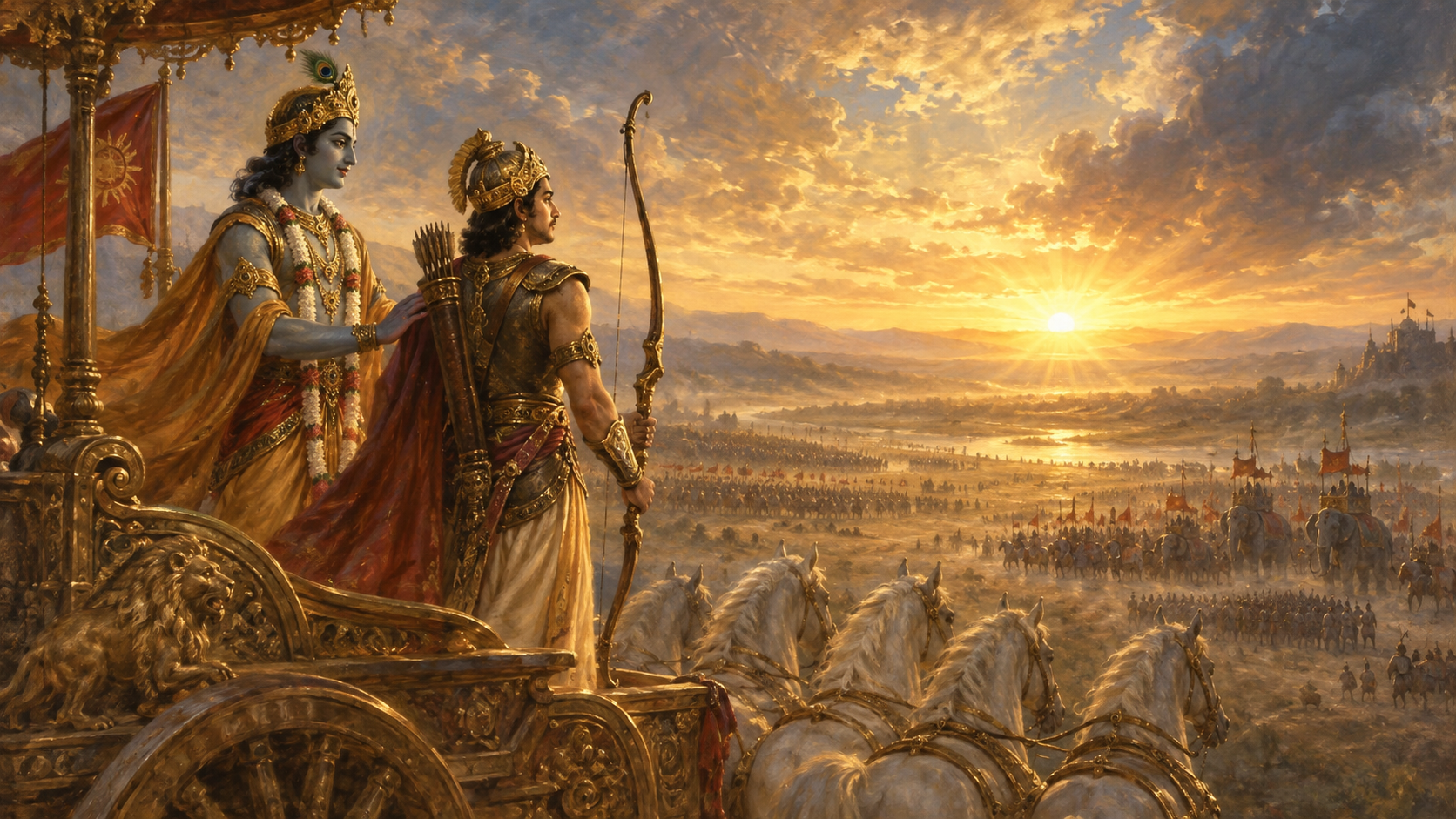
Śrīmad Bhagavad Gītā · Chapter 18
Liberation Through Renunciation
mōkṣasannyāsayōgaḥ
Hover over a Sanskrit word for a reading note. Click to keep it open.Tap a Sanskrit word for a reading note. Tap again or scroll to close.
ōṃ śrī paramātmanē namaḥ
Om. Salutations to the Supreme Self.
arjuna uvācha
sannyāsasya mahābāhō tattvamichChāmi vēditum ।
tyāgasya cha hṛṣīkēśa pṛthakkēśiniṣūdana ॥ 1 ॥
Arjuna said:
I desire, O mighty-armed, to know severally the essence of renunciation, O Hrishîkesha, and of relinquishment, O Keshinishûdana.
śrībhagavānuvācha
kāmyānāṃ karmaṇāṃ nyāsaṃ sannyāsaṃ kavayō viduḥ ।
sarvakarmaphalatyāgaṃ prāhustyāgaṃ vichakṣaṇāḥ ॥ 2 ॥
The Blessed Lord said:
Sages have known as renunciation the renouncing of works with desire; the relinquishing of the fruit of all actions is called relinquishment by the wise.
tyājyaṃ dōṣavadityēkē karma prāhurmanīṣiṇaḥ ।
yajñadānatapaḥkarma na tyājyamiti chāparē ॥ 3 ॥
"Action should be relinquished as an evil," declare some thoughtful men; "acts of sacrifice, gift and austerity should not be relinquished," say others.
niśchayaṃ śṛṇu mē tatra tyāgē bharatasattama ।
tyāgō hi puruṣavyāghra trividhaḥ samprakīrtitaḥ ॥ 4 ॥
Hear my conclusions as to that relinquishment, O best of the Bhâratas; since relinquishment, O tiger of men, has been explained as threefold.
yajñadānatapaḥkarma na tyājyaṃ kāryamēva tat ।
yajñō dānaṃ tapaśchaiva pāvanāni manīṣiṇām ॥ 5 ॥
Acts of sacrifice, gift and austerity should not be relinquished, but should be performed; sacrifice, gift and also austerity are the purifiers of the intelligent.
ētānyapi tu karmāṇi saṅgaṃ tyaktvā phalāni cha ।
kartavyānīti mē pārtha niśchitaṃ matamuttamam ॥ 6 ॥
But even these actions should be done leaving aside attachment and fruit, O Pârtha; that is my certain and best belief.
niyatasya tu sannyāsaḥ karmaṇō nōpapadyatē ।
mōhāttasya parityāgastāmasaḥ parikīrtitaḥ ॥ 7 ॥
Verily renunciation of actions that are prescribed is not proper; the relinquishment thereof from delusion is said to be of darkness.
duḥkhamityēva yatkarma kāyaklēśabhayāttyajēt ।
sa kṛtvā rājasaṃ tyāgaṃ naiva tyāgaphalaṃ labhēt ॥ 8 ॥
He who relinquisheth an action from fear of physical suffering, saying "Painful," thus performing a passionate relinquishment, obtaineth not the fruit of relinquishment.
kāryamityēva yatkarma niyataṃ kriyatē'rjuna ।
saṅgaṃ tyaktvā phalaṃ chaiva sa tyāgaḥ sāttvikō mataḥ ॥ 9 ॥
He who performeth a prescribed action, saying, "it ought to be done," O Arjuna, relinquishing attachment and also fruit, that relinquishment is regarded as pure.
na dvēṣṭyakuśalaṃ karma kuśalē nānuṣajjatē ।
tyāgī sattvasamāviṣṭō mēdhāvī Chinnasaṃśayaḥ ॥ 10 ॥
The relinquisher pervaded by purity, intelligent and with doubts cut away, hateth not unpleasurable action nor is attached to pleasurable.
na hi dēhabhṛtā śakyaṃ tyaktuṃ karmāṇyaśēṣataḥ ।
yastu karmaphalatyāgī sa tyāgītyabhidhīyatē ॥ 11 ॥
Nor indeed can embodied beings completely relinquish action; verily he who relinquisheth the fruit of action, he is said to be a relinquisher.
aniṣṭamiṣṭaṃ miśraṃ cha trividhaṃ karmaṇaḥ phalam ।
bhavatyatyāgināṃ prētya na tu sannyāsināṃ kvachit ॥ 12 ॥
Good, evil and mixed—threefold is the fruit of action hereafter for the non-relinquisher; but there is none ever for the renouncer.
pañchaitāni mahābāhō kāraṇāni nibōdha mē ।
sāṅkhyē kṛtāntē prōktāni siddhayē sarvakarmaṇām ॥ 13 ॥
These five causes, O mighty-armed, learn of Me as declared in the Sâñkhya system for the accomplishment of all actions:
adhiṣṭhānaṃ tathā kartā karaṇaṃ cha pṛthagvidham ।
vividhāścha pṛthakchēṣṭā daivaṃ chaivātra pañchamam ॥ 14 ॥
The body, the actor, the various organs, the diverse kinds of energies, and the presiding deities also, the fifth.
śarīravāṅmanōbhiryatkarma prārabhatē naraḥ ।
nyāyyaṃ vā viparītaṃ vā pañchaitē tasya hētavaḥ ॥ 15 ॥
Whatever action a man performeth by his body, speech and mind, whether right or the reverse, these five are the cause thereof.
tatraivaṃ sati kartāramātmānaṃ kēvalaṃ tu yaḥ ।
paśyatyakṛtabuddhitvānna sa paśyati durmatiḥ ॥ 16 ॥
That being so, he verily who—owing to untrained Reason—looketh on his Self, which is isolated, as the actor, he of perverted intelligence, seeth not.
yasya nāhaṅkṛtō bhāvō buddhiryasya na lipyatē ।
hatvā'pi sa imāँllōkānna hanti na nibadhyatē ॥ 17 ॥
He who is free from the egoistic notion, whose Reason is not affected, though he slay these peoples, he slayeth not, nor is bound.
jñānaṃ jñēyaṃ parijñātā trividhā karmachōdanā ।
karaṇaṃ karma kartēti trividhaḥ karmasaṅgrahaḥ ॥ 18 ॥
Knowledge, the knowable and the knower, the threefold impulse to action; the organ, the action, the actor, the threefold constituents of action.
jñānaṃ karma cha kartā cha tridhaiva guṇabhēdataḥ ।
prōchyatē guṇasaṅkhyānē yathāvachChṛṇu tānyapi ॥ 19 ॥
Knowledge, action and actor in the category of qualities are also said to be severally threefold, from the difference of qualities; hear thou duly these also.
sarvabhūtēṣu yēnaikaṃ bhāvamavyayamīkṣatē ।
avibhaktaṃ vibhaktēṣu tajjñānaṃ viddhi sāttvikam ॥ 20 ॥
That by which one indestructible Being is seen in all beings, inseparate in the separated, know thou that knowledge as pure.
pṛthaktvēna tu yajjñānaṃ nānābhāvānpṛthagvidhān ।
vētti sarvēṣu bhūtēṣu tajjñānaṃ viddhi rājasam ॥ 21 ॥
But that knowledge which regardeth the several manifold existences in all beings as separate, that knowledge know thou as of passion;
yattu kṛtsnavadēkasminkāryē saktamahaitukam ।
atattvārthavadalpaṃ cha tattāmasamudāhṛtam ॥ 22 ॥
While that which clingeth to each one thing as if it were the whole, without reason, without grasping the reality, narrow, that is declared to be dark.
niyataṃ saṅgarahitamarāgadvēṣataḥ kṛtam ।
aphalaprēpsunā karma yattatsāttvikamuchyatē ॥ 23 ॥
An action which is ordained, done by one undesirous of fruit, devoid of attachment, without love or hate, that is called pure.
yattu kāmēpsunā karma sāhaṅkārēṇa vā punaḥ ।
kriyatē bahulāyāsaṃ tadrājasamudāhṛtam ॥ 24 ॥
But that action that is done by one longing for desires, or again with egoism, or with much effort, that is declared to be passionate.
anubandhaṃ kṣayaṃ hiṃsāmanapēkṣya cha pauruṣam ।
mōhādārabhyatē karma yattattāmasamuchyatē ॥ 25 ॥
The action undertaken from delusion, without regard to capacity and consequences—loss and injury to others—that is declared to be dark.
muktasaṅgō'nahaṃvādī dhṛtyutsāhasamanvitaḥ ।
siddhyasiddhyōrnirvikāraḥ kartā sāttvika uchyatē ॥ 26 ॥
Liberated from attachment, not egoistic, endued with firmness and confidence, unchanged by success or failure, that actor is called pure.
rāgī karmaphalaprēpsurlubdhō hiṃsātmakō'śuchiḥ ।
harṣaśōkānvitaḥ kartā rājasaḥ parikīrtitaḥ ॥ 27 ॥
Impassioned, desiring to obtain the fruit of actions, greedy, harmful, impure, moved by joy and sorrow, such an actor is pronounced passionate.
ayuktaḥ prākṛtaḥ stabdhaḥ śaṭhō naiṣkṛtikō'lasaḥ ।
viṣādī dīrghasūtrī cha kartā tāmasa uchyatē ॥ 28 ॥
Discordant, vulgar, stubborn, cheating, malicious, indolent, despairful, procrastinating, that actor is called dark.
buddhērbhēdaṃ dhṛtēśchaiva guṇatastrividhaṃ śṛṇu ।
prōchyamānamaśēṣēṇa pṛthaktvēna dhanañjaya ॥ 29 ॥
The division of Reason and of firmness also, threefold according to the qualities, hear thou related, unreservedly and severally, O Dhananjaya.
pravṛttiṃ cha nivṛttiṃ cha kāryākāryē bhayābhayē ।
bandhaṃ mōkṣaṃ cha yā vētti buddhiḥ sā pārtha sāttvikī ॥ 30 ॥
That which knoweth energy and abstinence, what ought to be done and what ought not to be done, fear and fearlessness, bondage and liberation, that Reason is pure, O Pârtha.
yayā dharmamadharmaṃ cha kāryaṃ chākāryamēva cha ।
ayathāvatprajānāti buddhiḥ sā pārtha rājasī ॥ 31 ॥
That by which one understandeth away Right and Wrong and also what ought to be done and what ought not to be done, that Reason, O Pârtha, is passionate.
adharmaṃ dharmamiti yā manyatē tamasāvṛtā ।
sarvārthānviparītāṃścha buddhiḥ sā pārtha tāmasī ॥ 32 ॥
That which, enwrapped in darkness, thinketh wrong to be right and seeth all things subverted, that Reason, O Pârtha, is of darkness.
dhṛtyā yayā dhārayatē manaḥprāṇēndriyakriyāḥ ।
yōgēnāvyabhichāriṇyā dhṛtiḥ sā pārtha sāttvikī ॥ 33 ॥
The unwavering firmness by which, through Yoga, one restraineth the activity of the mind, of the life breaths and of the sense-organs, that firmness, O Pârtha, is pure.
yayā tu dharmakāmārthāndhṛtyā dhārayatē'rjuna ।
prasaṅgēna phalākāṅkṣī dhṛtiḥ sā pārtha rājasī ॥ 34 ॥
But the firmness, O Arjuna, by which, from attachment desirous of fruit, one holdeth fast duty, desire and wealth, that firmness, O Pârtha, is passionate.
yayā svapnaṃ bhayaṃ śōkaṃ viṣādaṃ madamēva cha ।
na vimuñchati durmēdhā dhṛtiḥ sā pārtha tāmasī ॥ 35 ॥
That by which one from stupidity doth not abandon sleep, fear, grief, despair, and also vanity, that firmness, O Pârtha, is dark.
sukhaṃ tvidānīṃ trividhaṃ śṛṇu mē bharatarṣabha ।
abhyāsādramatē yatra duḥkhāntaṃ cha nigachChati ॥ 36 ॥
And now the threefold kinds of pleasure hear thou from Me, O bull of the Bhâratas. That in which one by practice rejoiceth, and which putteth an end to pain;
yattadagrē viṣamiva pariṇāmē'mṛtōpamam ।
tatsukhaṃ sāttvikaṃ prōktamātmabuddhiprasādajam ॥ 37 ॥
Which at first is as venom but in the end is as nectar; that pleasure is said to be pure, born of the blissful knowledge of the Self.
viṣayēndriyasaṃyōgādyattadagrē'mṛtōpamam ।
pariṇāmē viṣamiva tatsukhaṃ rājasaṃ smṛtam ॥ 38 ॥
That which from the union of the senses with their objects at first is as nectar, but in the end is like venom, that pleasure is accounted passionate.
yadagrē chānubandhē cha sukhaṃ mōhanamātmanaḥ ।
nidrālasyapramādōtthaṃ tattāmasamudāhṛtam ॥ 39 ॥
That pleasure which both at first and afterwards is delusive of the self, arising from sleep, indolence and heedlessness, that is declared dark.
na tadasti pṛthivyāṃ vā divi dēvēṣu vā punaḥ ।
sattvaṃ prakṛtijairmuktaṃ yadēbhiḥ syāttribhirguṇaiḥ ॥ 40 ॥
There is not an entity, either on the earth or again in heaven among the Shining Ones, that is liberated from these three qualities, born of Matter.
brāhmaṇakṣatriyaviśāṃ śūdrāṇāṃ cha parantapa ।
karmāṇi pravibhaktāni svabhāvaprabhavairguṇaiḥ ॥ 41 ॥
Of Brâhmanas, Kshattriyas, Vaishyas and Shûdras, O Parantapa, the duties have been distributed, according to the qualities born of their own natures.
śamō damastapaḥ śauchaṃ kṣāntirārjavamēva cha ।
jñānaṃ vijñānamāstikyaṃ brahmakarma svabhāvajam ॥ 42 ॥
Serenity, self-restraint, austerity, purity, forgiveness and also uprightness, wisdom, knowledge, belief in God, are the Brâhmana duty, born of his own nature.
śauryaṃ tējō dhṛtirdākṣyaṃ yuddhē chāpyapalāyanam ।
dānamīśvarabhāvaścha kṣātraṃ karma svabhāvajam ॥ 43 ॥
Prowess, splendour, firmness, dexterity, and also not flying from battle, generosity, the nature of a ruler, are the Kshattriya duty, born of his own nature.
kṛṣigaurakṣyavāṇijyaṃ vaiśyakarma svabhāvajam ।
paricharyātmakaṃ karma śūdrasyāpi svabhāvajam ॥ 44 ॥
Ploughing, protection of kine, and trade are the Vaishya duty, born of his own nature. Action of the nature of service is the Shûdra duty, born of his own nature.
svē svē karmaṇyabhirataḥ saṃsiddhiṃ labhatē naraḥ ।
svakarmanirataḥ siddhiṃ yathā vindati tachChṛṇu ॥ 45 ॥
Man reacheth perfection by each being intent on his own duty. Listen thou how perfection is won by him who is intent on his own duty.
yataḥ pravṛttirbhūtānāṃ yēna sarvamidaṃ tatam ।
svakarmaṇā tamabhyarchya siddhiṃ vindati mānavaḥ ॥ 46 ॥
He from whom is the emanation of beings, by Whom all This is pervaded, by worshipping Him in his own duty a man winneth perfection.
śrēyānsvadharmō viguṇaḥ paradharmōtsvanuṣṭhitāt ।
svabhāvaniyataṃ karma kurvannāpnōti kilbiṣam ॥ 47 ॥
Better is one's own duty though destitute of merits than the well-executed duty of another. He who doeth the duty laid down by his own nature incurreth not sin.
sahajaṃ karma kauntēya sadōṣamapi na tyajēt ।
sarvārambhā hi dōṣēṇa dhūmēnāgnirivāvṛtāḥ ॥ 48 ॥
Congenital duty, O son of Kunti, though defective, ought not to be abandoned. All undertakings indeed are clouded by defects as fire by smoke.
asaktabuddhiḥ sarvatra jitātmā vigataspṛhaḥ ।
naiṣkarmyasiddhiṃ paramāṃ sannyāsēnādhigachChati ॥ 49 ॥
He whose Reason is everywhere unattached, the self-subdued, dead to desires, he goeth by renunciation to the supreme perfection of freedom from obligation.
siddhiṃ prāptō yathā brahma tathāpnōti nibōdha mē ।
samāsēnaiva kauntēya niṣṭhā jñānasya yā parā ॥ 50 ॥
How he who hath attained perfection obtaineth the Eternal, that highest state of wisdom, learn thou from Me only succinctly, O Kaunteya.
buddhyā viśuddhayā yuktō dhṛtyātmānaṃ niyamya cha ।
śabdādīnviṣayāṃstyaktvā rāgadvēṣau vyudasya cha ॥ 51 ॥
United to this Reason, purified, controlling the self by firmness, having abandoned sound and the other objects of the senses, having laid aside passion and malice,
viviktasēvī laghvāśī yatavākkāyamānasaḥ ।
dhyānayōgaparō nityaṃ vairāgyaṃ samupāśritaḥ ॥ 52 ॥
Dwelling in solitude, abstemious, speech, body and mind subdued, constantly fixed in meditation and yoga, taking refuge in dispassion,
ahaṅkāraṃ balaṃ darpaṃ kāmaṃ krōdhaṃ parigraham ।
vimuchya nirmamaḥ śāntō brahmabhūyāya kalpatē ॥ 53 ॥
Having cast aside egoism, violence, arrogance, desire, wrath, covetousness, selfless and peaceful—he is fit to become the Eternal.
brahmabhūtaḥ prasannātmā na śōchati na kāṅkṣati ।
samaḥ sarvēṣu bhūtēṣu madbhaktiṃ labhatē parām ॥ 54 ॥
Becoming the Eternal, serene in the Self, he neither grieveth nor desireth; the same to all beings, he obtaineth supreme devotion unto Me.
bhaktyā māmabhijānāti yāvānyaśchāsmi tattvataḥ ।
tatō māṃ tattvatō jñātvā viśatē tadanantaram ॥ 55 ॥
By devotion he knoweth Me in essence, who and what I am; having thus known Me in essence he forthwith entereth into the Supreme.
sarvakarmāṇyapi sadā kurvāṇō madvyapāśrayaḥ ।
matprasādādavāpnōti śāśvataṃ padamavyayam ॥ 56 ॥
Though ever performing all actions, taking refuge in Me, by My grace he obtaineth the eternal indestructible abode.
chētasā sarvakarmāṇi mayi sannyasya matparaḥ ।
buddhiyōgamupāśritya machchittaḥ satataṃ bhava ॥ 57 ॥
Renouncing mentally all works in Me, intent on Me, resorting to the yoga of discrimination, have thy thought ever on Me.
machchittaḥ sarvadurgāṇi matprasādāttariṣyasi ।
atha chēttvamahaṅkārānna śrōṣyasi vinaṅkṣyasi ॥ 58 ॥
Thinking on Me, thou shalt overcome all obstacles by My grace: but if from egoism thou wilt not listen, thou shalt be destroyed utterly.
yadahaṅkāramāśritya na yōtsya iti manyasē ।
mithyaiṣa vyavasāyastē prakṛtistvāṃ niyōkṣyati ॥ 59 ॥
Entrenched in egoism, thou thinkest, "I will not fight;" to no purpose thy determination; nature will constrain thee.
svabhāvajēna kauntēya nibaddhaḥ svēna karmaṇā ।
kartuṃ nēchChasi yanmōhātkariṣyasyavaśō'pi tat ॥ 60 ॥
O son of Kuntî, bound by thine own duty born of thine own nature, that which from delusion thou desirest not to do, even that helplessly thou shalt perform.
īśvaraḥ sarvabhūtānāṃ hṛddēśē'rjuna tiṣṭhati ।
bhrāmayansarvabhūtāni yantrārūḍhāni māyayā ॥ 61 ॥
The Lord dwelleth in the hearts of all beings, O Arjuna, by His illusive Power causing all beings to revolve, as though mounted on a potter's wheel.
tamēva śaraṇaṃ gachCha sarvabhāvēna bhārata ।
tatprasādātparāṃ śāntiṃ sthānaṃ prāpsyasi śāśvatam ॥ 62 ॥
Flee unto Him for shelter with all thy being, O Bhârata; by His grace thou shalt obtain supreme peace, the everlasting dwelling-place.
iti tē jñānamākhyātaṃ guhyādguhyataraṃ mayā ।
vimṛśyaitadaśēṣēṇa yathēchChasi tathā kuru ॥ 63 ॥
Thus hath wisdom, more secret than secrecy itself, been declared unto thee by Me; having reflected on it fully, then act thou as thou listest.
sarvaguhyatamaṃ bhūyaḥ śṛṇu mē paramaṃ vachaḥ ।
iṣṭō'si mē dṛḍhamiti tatō vakṣyāmi tē hitam ॥ 64 ॥
Listen thou again to My supreme word, most secret of all; beloved art thou of Me, and steadfast of heart, therefore will I speak for thy benefit.
manmanā bhava madbhaktō madyājī māṃ namaskuru ।
māmēvaiṣyasi satyaṃ tē pratijānē priyō'si mē ॥ 65 ॥
Merge thy mind in Me, be my devotee, sacrifice to Me, prostrate thyself before Me, thou shalt come even to Me. I pledge thee My troth; thou art dear to Me.
sarvadharmānparityajya māmēkaṃ śaraṇaṃ vraja ।
ahaṃ tvā sarvapāpēbhyō mōkṣayiṣyāmi mā śuchaḥ ॥ 66 ॥
Abandoning all duties come unto Me alone for shelter; sorrow not, I will liberate thee from all sins.
idaṃ tē nātapaskāya nābhaktāya kadāchana ।
na chāśuśrūṣavē vāchyaṃ na cha māṃ yō'bhyasūyati ॥ 67 ॥
Never is this to be spoken by thee to anyone who is without asceticism, nor without devotion, nor to one who desireth not to listen, nor yet to him who speaketh evil of Me.
ya imaṃ paramaṃ guhyaṃ madbhaktēṣvabhidhāsyati ।
bhaktiṃ mayi parāṃ kṛtvā māmēvaiṣyatyasaṃśayaḥ ॥ 68 ॥
He who shall declare this supreme secret among My devotees, having shown the highest devotion for Me, without doubt he shall come to Me.
na cha tasmānmanuṣyēṣu kaśchinmē priyakṛttamaḥ ।
bhavitā na cha mē tasmādanyaḥ priyatarō bhuvi ॥ 69 ॥
Nor is there any among men who performeth dearer service to Me than he, nor any other shall be more beloved by Me on earth than he.
adhyēṣyatē cha ya imaṃ dharmyaṃ saṃvādamāvayōḥ ।
jñānayajñēna tēnāhamiṣṭaḥ syāmiti mē matiḥ ॥ 70 ॥
And he who shall study this sacred dialogue of ours, by him I shall be worshipped with the sacrifice of wisdom. Such is My mind.
śraddhāvānanasūyaścha śṛṇuyādapi yō naraḥ ।
sō'pi muktaḥ śubhāఁllōkānprāpnuyātpuṇyakarmaṇām ॥ 71 ॥
The man also who, full of faith, merely heareth it unreviling, even he, freed from evil, obtaineth the radiant worlds of the righteous.
kachchidētachChrutaṃ pārtha tvayaikāgrēṇa chētasā ।
kachchidajñānasammōhaḥ pranaṣṭastē dhanañjaya ॥ 72 ॥
Hath this been heard, O son of Prithâ, with one-pointed mind? Has thy delusion, caused by unwisdom, been destroyed, O Dhananjaya?
arjuna uvācha
naṣṭō mōhaḥ smṛtirlabdhā tvatprasādānmayāchyuta ।
sthitō'smi gatasandēhaḥ kariṣyē vachanaṃ tava ॥ 73 ॥
Arjuna said:
Destroyed is my delusion. I have gained knowledge through Thy grace, O Immutable one. I am firm, my doubts have fled away. I will do according to Thy word.
sañjaya uvācha
ityahaṃ vāsudēvasya pārthasya cha mahātmanaḥ ।
saṃvādamimamaśrauṣamadbhutaṃ rōmaharṣaṇam ॥ 74 ॥
Sanjaya said:
I heard this marvellous dialogue of Vâsudeva, and of the great-souled Partha, causing my hair to stand on end.
vyāsaprasādāchChrutavānētadguhyamahaṃ param ।
yōgaṃ yōgēśvarātkṛṣṇātsākṣātkathayataḥ svayam ॥ 75 ॥
By the favour of Vyâsa I listened to this secret and supreme yoga from the Lord of Yoga, Krishna Himself, speaking before mine eyes.
rājansaṃsmṛtya saṃsmṛtya saṃvādamimamadbhutam ।
kēśavārjunayōḥ puṇyaṃ hṛṣyāmi cha muhurmuhuḥ ॥ 76 ॥
O King, remembering, remembering this marvellous and holy dialogue between Keshava and Arjuna, I rejoice again and again.
tachcha saṃsmṛtya saṃsmṛtya rūpamatyadbhutaṃ harēḥ ।
vismayō mē mahānrājanhṛṣyāmi cha punaḥ punaḥ ॥ 77 ॥
Remembering, remembering, also that most marvellous form of Hari, great is my wonder, O King. I rejoice, again and again.
yatra yōgēśvaraḥ kṛṣṇō yatra pārthō dhanurdharaḥ ।
tatra śrīrvijayō bhūtirdhruvā nītirmatirmama ॥ 78 ॥
Wherever is Krishna, Yoga's Lord, wherever is Pârtha, the archer, assured are there prosperity, victory and happiness. So I think.
Sanskrit text and numbering: Vaidika Vignanam · Chapter 18. English: Annie Besant, 1922 edition (public domain). Reading notes are original, AI-assisted editorial aids, not traditional commentary.
About the text & artwork