Śrīmad Bhagavad Gītā · Chapter 1
Arjuna’s Despair
arjunaviṣādayōgaḥ
Hover over a Sanskrit word for a reading note. Click to keep it open.Tap a Sanskrit word for a reading note. Tap again or scroll to close.
ōṃ śrī paramātmanē namaḥ
Om. Salutations to the Supreme Self.
dhṛtarāṣṭra uvācha
dharmakṣētrē kurukṣētrē samavētā yuyutsavaḥ ।
māmakāḥ pāṇḍavāśchaiva kimakurvata sañjaya ॥ 1 ॥
Dhritarâshtra said:
On the holy plain, on the field of Kuru, gathered together, eager for battle, what did they, O Sanjaya, my people and the Pândavas?
sañjaya uvācha
dṛṣṭvā tu pāṇḍavānīkaṃ vyūḍhaṃ duryōdhanastadā ।
āchāryamupasaṅgamya rājā vachanamabravīt ॥ 2 ॥
Sanjaya said:
Having seen arrayed the army of the Pândavas, the Prince Duryodhana approached his teacher, and spake these words:
paśyaitāṃ pāṇḍuputrāṇāmāchārya mahatīṃ chamūm ।
vyūḍhāṃ drupadaputrēṇa tava śiṣyēṇa dhīmatā ॥ 3 ॥
"Behold this mighty host of the sons of Pându, O teacher, arrayed by the son of Drupada, thy wise disciple.
atra śūrā mahēṣvāsā bhīmārjunasamā yudhi ।
yuyudhānō virāṭaścha drupadaścha mahārathaḥ ॥ 4 ॥
Heroes are these, mighty bowmen, to Bhîma and Arjuna equal in battle: Yuyudhâna, Virâta, and Drupada of the great car.
dhṛṣṭakētuśchēkitānaḥ kāśirājaścha vīryavān ।
purujitkuntibhōjaścha śaibyaścha narapuṅgavaḥ ॥ 5 ॥
Drishtaketu, Chekitâna and the valiant King of Kâshi, Purujit and Kuntibhoja, and Shaivya, bull among men;
yudhāmanyuścha vikrānta uttamaujāścha vīryavān ।
saubhadrō draupadēyāścha sarva ēva mahārathāḥ ॥ 6 ॥
Yudhâmanyu the strong, and Uttamaujas the brave; Saubhadra and the Draupadeyas, all of great cars.
asmākaṃ tu viśiṣṭā yē tānnibōdha dvijōttama ।
nāyakā mama sainyasya sañjñārthaṃ tānbravīmi tē ॥ 7 ॥
Know further all those who are our chiefs, O best of the twice-born, the leaders of my army; these I name to thee for thy information:
bhavānbhīṣmaścha karṇaścha kṛpaścha samitiñjayaḥ ।
aśvatthāmā vikarṇaścha saumadattistathaiva cha ॥ 8 ॥
Thou, Lord, and Bhîshma, and Karna and Kripa, conquering in battle; Ashvatthâmâ, Vikarna, and Saumadatti also;
anyē cha bahavaḥ śūrā madarthē tyaktajīvitāḥ ।
nānāśastrapraharaṇāḥ sarvē yuddhaviśāradāḥ ॥ 9 ॥
And many others, heroes, for my sake renouncing their lives, with divers weapons and missiles, and all well-skilled in war.
aparyāptaṃ tadasmākaṃ balaṃ bhīṣmābhirakṣitam ।
paryāptaṃ tvidamētēṣāṃ balaṃ bhīmābhirakṣitam ॥ 10 ॥
Yet insufficient seems this army of ours, though marshalled by Bhîshma, while that army of theirs seems sufficient, though marshalled by Bhîma;
ayanēṣu cha sarvēṣu yathābhāgamavasthitāḥ ।
bhīṣmamēvābhirakṣantu bhavantaḥ sarva ēva hi ॥ 11 ॥
Therefore in the rank and file let all, standing firmly in their respective divisions, guard Bhîshma, even all ye generals.
tasya sañjanayanharṣaṃ kuruvṛddhaḥ pitāmahaḥ ।
siṃhanādaṃ vinadyōchchaiḥ śaṅkhaṃ dadhmau pratāpavān ॥ 12 ॥
To enhearten him, the Ancient of the Kurus, the Grandsire, the glorious, blew his conch, sounding on high a lion's roar.
tataḥ śaṅkhāścha bhēryaścha paṇavānakagōmukhāḥ ।
sahasaivābhyahanyanta sa śabdastumulō'bhavat ॥ 13 ॥
Then conches and kettledrums, tabors and drums and cowhorns, suddenly blared forth, and the sound was tumultuous.
tataḥ śvētairhayairyuktē mahati syandanē sthitau ।
mādhavaḥ pāṇḍavaśchaiva divyau śaṅkhau pradaghmatuḥ ॥ 14 ॥
Then, stationed in their great war-chariot, yoked to white horses, Mâdhava and the son of Pându blew their divine conches.
pāñchajanyaṃ hṛṣīkēśō dēvadattaṃ dhanañjayaḥ ।
pauṇḍraṃ dadhmau mahāśaṅkhaṃ bhīmakarmā vṛkōdaraḥ ॥ 15 ॥
Pânchajanya by Hrishîkesha, and Devadatta by Dhananjaya. Vrikodara of terrible deeds blew his mighty conch, Paundra;
anantavijayaṃ rājā kuntīputrō yudhiṣṭhiraḥ ।
nakulaḥ sahadēvaścha sughōṣamaṇipuṣpakau ॥ 16 ॥
The King Yudhishthira, the son of Kuntî, blew Anantavijaya; Nakula and Sahadeva, Sughosha and Manipushpaka.
kāśyaścha paramēṣvāsaḥ śikhaṇḍī cha mahārathaḥ ।
dhṛṣṭadyumnō virāṭaścha sātyakiśchāparājitaḥ ॥ 17 ॥
And Kâshya, of the great bow and Shikhandî, the mighty car-warrior, Drishtadyumna and Virâta and Sâtyaki, the unconquered.
drupadō draupadēyāścha sarvaśaḥ pṛthivīpatē ।
saubhadraścha mahābāhuḥ śaṅkhāndadhmuḥ pṛthakpṛthak ॥ 18 ॥
Drupada and the Draupadeyas, O Lord of earth, and Saubhadra, the mighty-armed, on all sides their several conches blew.
sa ghōṣō dhārtarāṣṭrāṇāṃ hṛdayāni vyadārayat ।
nabhaścha pṛthivīṃ chaiva tumulō vyanunādayan ॥ 19 ॥
That tumultuous uproar rent the hearts of the sons of Dhritarâshtra, filling the earth and sky with sound.
atha vyavasthitāndṛṣṭvā dhārtarāṣṭrānkapidhvajaḥ ।
pravṛttē śastrasampātē dhanurudyamya pāṇḍavaḥ ॥ 20 ॥
Then, beholding the sons of Dhritarâshtra standing arrayed, and flight of missiles about to begin, he whose crest is an ape, the son of Pându, took up his bow,
hṛṣīkēśaṃ tadā vākyamidamāha mahīpatē।
arjuna uvācha
sēnayōrubhayōrmadhyē rathaṃ sthāpaya mē'chyuta ॥ 21 ॥
And spake this word to Hrishîkesha, O Lord of Earth: Arjuna said: In the midst, between the two armies, stay my chariot, O Achyuta,
yāvadētānnirīkṣē'haṃ yōddhukāmānavasthitān ।
kairmayā saha yōddhavyamasminraṇasamudyamē ॥ 22 ॥
That I may behold these standing, longing for battle, with whom I must strive in this outbreaking war,
yōtsyamānānavēkṣē'haṃ ya ētē'tra samāgatāḥ ।
dhārtarāṣṭrasya durbuddhēryuddhē priyachikīrṣavaḥ ॥ 23 ॥
And gaze on those here gathered together ready to fight, desirous of pleasing in battle the evil-minded son of Dhritarâshtra.
sañjaya uvācha
ēvamuktō hṛṣīkēśō guḍākēśēna bhārata ।
sēnayōrubhayōrmadhyē sthāpayitvā rathōttamam ॥ 24 ॥
Sanjaya said:
Thus addressed by Gudâkesha, Hrishîkesha, O Bhârata, having stayed that best of chariots in the midst, between the two armies,
bhīṣmadrōṇapramukhataḥ sarvēṣāṃ cha mahīkṣitām ।
uvācha pārtha paśyaitānsamavētānkurūniti ॥ 25 ॥
Over against Bhîshma, Drona and all the rulers of the world, said: "O Pârtha, behold these Kurus gathered together."
tatrāpaśyatsthitānpārthaḥ pitṝnatha pitāmahān ।
āchāryānmātulānbhrātṝnputrānpautrānsakhīṃstathā ॥ 26 ॥
Then saw Pârtha standing there, uncles and grandfathers, teachers, mother's brothers, cousins, sons and grandsons, comrades,
śvaśurānsuhṛdaśchaiva sēnayōrubhayōrapi ।
tānsamīkṣya sa kauntēyaḥ sarvānbandhūnavasthitān ॥ 27 ॥
Fathers-in-law and benefactors also in both armies; seeing all these kinsmen thus standing arrayed, Kaunteya,
kṛpayā parayāviṣṭō viṣīdannidamabravīt।
arjuna uvācha
dṛṣṭvēmaṃ svajanaṃ kṛṣṇa yuyutsuṃ samupasthitam ॥ 28 ॥
Deeply moved to pity, thus uttered in sadness: Arjuna said: Seeing these my kinsmen, O Krishna, arrayed, eager to fight,
sīdanti mama gātrāṇi mukhaṃ cha pariśuṣyati ।
vēpathuścha śarīrē mē rōmaharṣaścha jāyatē ॥ 29 ॥
My limbs fail and my mouth is parched, my body quivers, and my hair stands on end,
gāṇḍīvaṃ sraṃsatē hastāttvakchaiva paridahyatē ।
na cha śaknōmyavasthātuṃ bhramatīva cha mē manaḥ ॥ 30 ॥
Gândîva slips from my hand, and my skin burns all over, I am not able to stand, my mind is whirling,
nimittāni cha paśyāmi viparītāni kēśava ।
na cha śrēyō'nupaśyāmi hatvā svajanamāhavē ॥ 31 ॥
And I see adverse omens, O Keshava. Nor do I foresee any advantage from slaying kinsmen in battle.
na kāṅkṣē vijayaṃ kṛṣṇa na cha rājyaṃ sukhāni cha ।
kiṃ nō rājyēna gōvinda kiṃ bhōgairjīvitēna vā ॥ 32 ॥
For I desire not victory, O Krishna, nor kingdom, nor pleasures; what is kingdom to us, O Govinda, what enjoyment or even life?
yēṣāmarthē kāṅkṣitaṃ nō rājyaṃ bhōgāḥ sukhāni cha ।
ta imē'vasthitā yuddhē prāṇāṃstyaktvā dhanāni cha ॥ 33 ॥
Those for whose sake we desire kingdom, enjoyments and pleasures, they stand here in battle, abandoning life and riches—
āchāryāḥ pitaraḥ putrāstathaiva cha pitāmahāḥ ।
mātulāḥ śvaśurāḥ pautrāḥ śyālāḥ sambandhinastathā ॥ 34 ॥
Teachers, fathers, sons, as well as grandfathers, mother's brothers, fathers-in-law, grandsons, brothers-in-law, and other relatives.
ētānna hantumichChāmi ghnatō'pi madhusūdana ।
api trailōkyarājyasya hētōḥ kiṃ nu mahīkṛtē ॥ 35 ॥
These I do not wish to kill, though myself slain, O Madhusûdana, even for the sake of the kingship of the three worlds; how then for earth?
nihatya dhārtarāṣṭrānnaḥ kā prītiḥ syājjanārdana ।
pāpamēvāśrayēdasmānhatvaitānātatāyinaḥ ॥ 36 ॥
Slaying these sons of Dhritarâshtra, what pleasure can be ours, O Janârdana? Killing these desperadoes, sin will but take hold of us.
tasmānnārhā vayaṃ hantuṃ dhārtarāṣṭrānsvabāndhavān ।
svajanaṃ hi kathaṃ hatvā sukhinaḥ syāma mādhava ॥ 37 ॥
Therefore we should not kill the sons of Dhritarâshtra, our relatives; for how, killing our kinsmen, may we be happy, O Mâdhava?
yadyapyētē na paśyanti lōbhōpahatachētasaḥ ।
kulakṣayakṛtaṃ dōṣaṃ mitradrōhē cha pātakam ॥ 38 ॥
Although these, with intelligence overpowered by greed, see no guilt in the destruction of a family, no crime in hostility to friends,
kathaṃ na jñēyamasmābhiḥ pāpādasmānnivartitum ।
kulakṣayakṛtaṃ dōṣaṃ prapaśyadbhirjanārdana ॥ 39 ॥
Why should not we learn to turn away from such a sin, O Janârdana, who see the evils in the destruction of a family?
kulakṣayē praṇaśyanti kuladharmāḥ sanātanāḥ ।
dharmē naṣṭē kulaṃ kṛtsnamadharmō'bhibhavatyuta ॥ 40 ॥
In the destruction of a family the immemorial family traditions perish; in the perishing of tradition, lawlessness overcomes the whole family;
adharmābhibhavātkṛṣṇa praduṣyanti kulastriyaḥ ।
strīṣu duṣṭāsu vārṣṇēya jāyatē varṇasaṅkaraḥ ॥ 41 ॥
Owing to predominance of lawlessness, O Krishna, the women of the family become corrupt; women corrupted, O Vârshneya, there ariseth caste confusion;
saṅkarō narakāyaiva kulaghnānāṃ kulasya cha ।
patanti pitarō hyēṣāṃ luptapiṇḍōdakakriyāḥ ॥ 42 ॥
This confusion draggeth to hell the slayers of the family, and the family; for their ancestors fall, deprived of rice-balls and libations.
dōṣairētaiḥ kulaghnānāṃ varṇasaṅkarakārakaiḥ ।
utsādyantē jātidharmāḥ kuladharmāścha śāśvatāḥ ॥ 43 ॥
By these caste-confusing misdeeds of the slayers of the family, the everlasting caste customs and family customs are abolished.
utsannakuladharmāṇāṃ manuṣyāṇāṃ janārdana ।
narakē'niyataṃ vāsō bhavatītyanuśuśruma ॥ 44 ॥
The abode of the men whose family customs are extinguished, O Janârdana, is everlastingly in hell. Thus have we heard.
ahō bata mahatpāpaṃ kartuṃ vyavasitā vayam ।
yadrājyasukhalōbhēna hantuṃ svajanamudyatāḥ ॥ 45 ॥
Alas! in committing a great sin are we engaged, we who are endeavouring to kill our kindred from greed of the pleasures of kingship.
yadi māmapratīkāramaśastraṃ śastrapāṇayaḥ ।
dhārtarāṣṭrā raṇē hanyustanmē kṣēmataraṃ bhavēt ॥ 46 ॥
If the sons of Dhritarâshtra, weapon in hand, should slay me, unresisting, unarmed, in the battle, that would for me be the better.
sañjaya uvācha ।
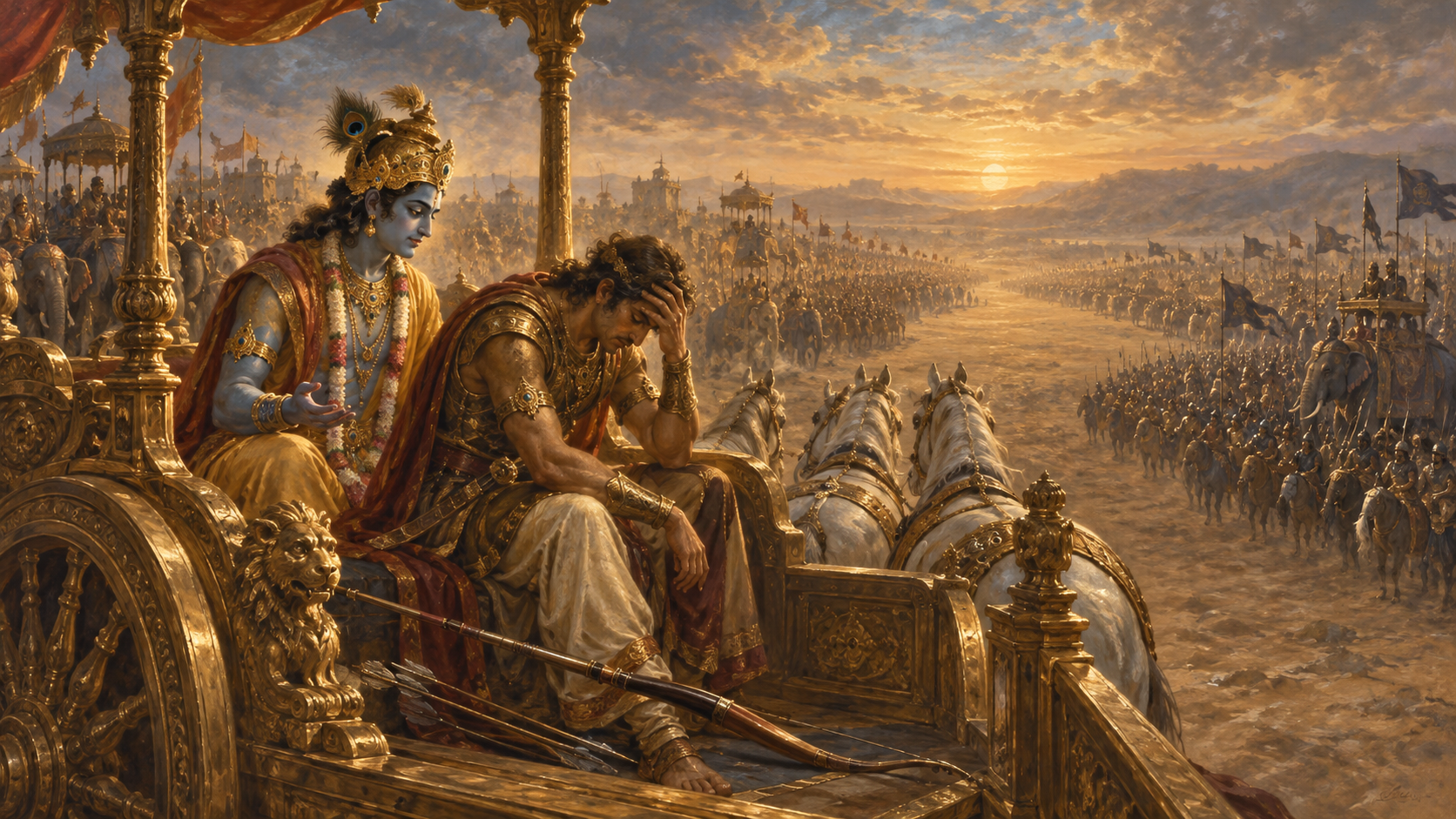
ēvamuktvārjunaḥ saṅkhyē rathōpastha upāviśat ।
visṛjya saśaraṃ chāpaṃ śōkasaṃvignamānasaḥ ॥ 47 ॥
Sanjaya said:
Having thus spoken on the battle-field, Arjuna sank down on the seat of the chariot, casting away his bow and arrow, his mind overborne by grief.
Sanskrit text and numbering: Vaidika Vignanam · Chapter 1. English: Annie Besant, 1922 edition (public domain). Reading notes are original, AI-assisted editorial aids, not traditional commentary.
About the text & artwork