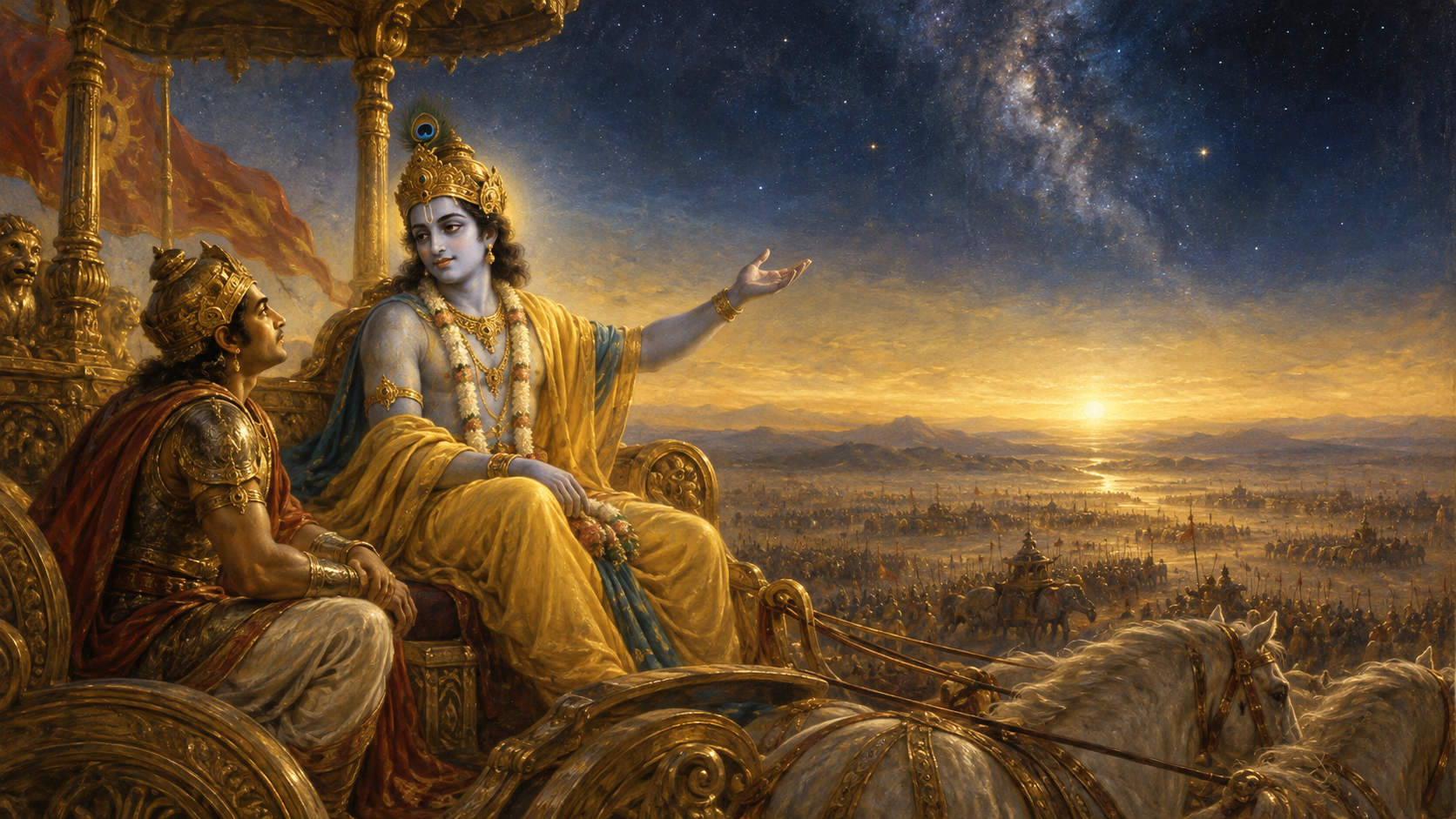
Śrīmad Bhagavad Gītā · Chapter 2
The Yoga of Wisdom
sāṅkhyayōgaḥ
Hover over a Sanskrit word for a reading note. Click to keep it open.Tap a Sanskrit word for a reading note. Tap again or scroll to close.
ōṃ śrī paramātmanē namaḥ
Om. Salutations to the Supreme Self.
sañjaya uvācha ।
taṃ tathā kṛpayāviṣṭamaśrupūrṇākulēkṣaṇam ।
viṣīdantamidaṃ vākyamuvācha madhusūdanaḥ ॥ 1 ॥
Sanjaya said:
To him thus with pity overcome, with smarting brimming eyes, despondent, Madhusûdana spake these words:
śrībhagavānuvācha ।
kutastvā kaśmalamidaṃ viṣamē samupasthitam ।
anāryajuṣṭamasvargyamakīrtikaramarjuna ॥ 2 ॥
The Blessed Lord said:
Whence hath this dejection befallen thee in this perilous strait, ignoble, heaven-closing, infamous, O Arjuna?
klaibyaṃ mā sma gamaḥ pārtha naitattvayyupapadyatē ।
kṣudraṃ hṛdayadaurbalyaṃ tyaktvōttiṣṭha parantapa ॥ 3 ॥
Yield not to impotence, O Partha! it doth not befit thee. Shake off this paltry faint-heartedness! Stand up, Parantapa!
arjuna uvācha ।
kathaṃ bhīṣmamahaṃ sāṅkhyē drōṇaṃ cha madhusūdana ।
iṣubhiḥ pratiyōtsyāmi pūjārhāvarisūdana ॥ 4 ॥
Arjuna said:
How, O Madhusûdana, shall I attack Bhîshma and Drona with arrows in battle, they who are worthy of reverence, O slayer of foes?
gurūnahatvā hi mahānubhāvānśrēyō bhōktuṃ bhaikṣyamapīha lōkē ।
hatvārthakāmāṃstu gurunihaiva bhuñjīya bhōgān'rudhirapradigdhān ॥ 5 ॥
Better in this world to eat even the beggar's crust than to slay these most noble Gurus. Slaying these Gurus, our well-wishers, I should taste of blood-besprinkled feasts.
na chaitadvidmaḥ katarannō garīyō yadvā jayēma yadi vā nō jayēyuḥ।
yānēva hatvā na jijīviṣāmastē'vasthitāḥ pramukhē dhārtarāṣṭrāḥ ॥ 6 ॥
Nor know I which for us be the better, that we conquer them or they conquer us—these, whom having slain we should not care to live, even these arrayed against us, the sons of Dhritarâshtra.
kārpaṇyadōṣōpahatasvabhāvaḥ pṛchChāmi tvāṃ dharmasammūḍhachētāḥ।
yachChrēyaḥ syānniśchitaṃ brūhi tanmē śiṣyastē'haṃ śādhi māṃ tvāṃ prapannam ॥ 7 ॥
My heart is weighed down with the vice of faintness; my mind is confused as to duty. I ask thee which may be the better—that tell me decisively. I am thy disciple, suppliant to Thee; teach me.
na hi prapaśyāmi mamāpanudyādyachChōkamuchChōṣaṇamindriyāṇām।
avāpya bhūmāvasapatnamṛddhaṃ rājyaṃ surāṇāmapi chādhipatyam ॥ 8 ॥
For I see not that it would drive away this anguish that withers up my senses, if I should attain unrivalled monarchy on earth, or even the sovereignty of the Shining Ones.
sañjaya uvācha ।
ēvamuktvā hṛṣīkēśaṃ guḍākēśaḥ parantapa ।
na yōtsya iti gōvindamuktvā tūṣṇīṃ babhūva ha ॥ 9 ॥
Sanjaya said:
Gudâkesha, conqueror of his foes, having thus addressed Hrishîkesha and said to Govinda, "I will not fight!", became silent.
tamuvācha hṛṣīkēśaḥ prahasanniva bhārata ।
sēnayōrubhayōrmadhyē viṣīdantamidaṃ vachaḥ ॥ 10 ॥
Then Hrishîkesha, smiling, as it were, O Bhârata, spake these words to him, despondent, in the midst of the two armies:
śrībhagavānuvācha ।
aśōchyānanvaśōchastvaṃ prajñāvādāṃścha bhāṣasē ।
gatāsūnagatāsūṃścha nānuśōchanti paṇḍitāḥ ॥ 11 ॥
The Blessed Lord said:
Thou grievest for those that should not be grieved for, yet speakest words of wisdom. The wise grieve neither for the living nor for the dead.
na tvēvāhaṃ jātu nāsaṃ na tvaṃ nēmē janādhipāḥ ।
na chaiva na bhaviṣyāmaḥ sarvē vayamataḥ param ॥ 12 ॥
Nor at any time verily was I not, nor thou, nor these princes of men, nor verily shall we ever cease to be, hereafter.
dēhinō'sminyathā dēhē kaumāraṃ yauvanaṃ jarā ।
tathā dēhāntaraprāptirdhīrastatra na muhyati ॥ 13 ॥
As the dweller in the body experienceth in the body childhood, youth, old age, so passeth he on to another body; the steadfast one grieveth not thereat.
mātrāsparśāstu kauntēya śītōṣṇasukhaduḥkhadāḥ ।
āgamāpāyinō'nityāstāṃstitikṣasva bhārata ॥ 14 ॥
The contacts of matter, O son of Kuntî, giving cold and heat, pleasure and pain, they come and go, impermanent; endure them bravely, O Bhârata.
yaṃ hi na vyathayantyētē puruṣaṃ puruṣarṣabha ।
samaduḥkhasukhaṃ dhīraṃ sō'mṛtatvāya kalpatē ॥ 15 ॥
The man whom these torment not, O chief of men, balanced in pain and pleasure, steadfast, he is fitted for immortality.
nāsatō vidyatē bhāvō nābhāvō vidyatē sataḥ ।
ubhayōrapi dṛṣṭō'ntastvanayōstattvadarśibhiḥ ॥ 16 ॥
The unreal hath no being; the real never ceaseth to be; the truth about both hath been perceived by the seers of the essence of things.
avināśi tu tadviddhi yēna sarvamidaṃ tatam ।
vināśamavyayasyāsya na kaśchitkartumarhati ॥ 17 ॥
Know That to be indestructible by whom all this is pervaded. Nor can any work the destruction of that imperishable One.
antavanta imē dēhā nityasyōktāḥ śarīriṇaḥ ।
anāśinō'pramēyasya tasmādyudhyasva bhārata ॥ 18 ॥
These bodies of the embodied One, who is eternal, indestructible and immeasurable, are known as finite. Therefore fight, O Bhârata.
ya ēnaṃ vētti hantāraṃ yaśchainaṃ manyatē hatam ।
ubhau tau na vijānītō nāyaṃ hanti na hanyatē ॥ 19 ॥
He who regardeth this as a slayer, and he who thinketh he is slain, both of them are ignorant. He slayeth not, nor is he slain.
na jāyatē mriyatē vā kadāchinnāyaṃ bhūtvā bhavitā vā na bhūyaḥ।
ajō nityaḥ śāśvatō'yaṃ purāṇō na hanyatē hanyamānē śarīrē ॥ 20 ॥
He is not born, nor doth he die; nor having been, ceaseth he any more to be; unborn, perpetual, eternal and ancient, he is not slain when the body is slaughtered.
vēdāvināśinaṃ nityaṃ ya ēnamajamavyayam ।
athaṃ sa puruṣaḥ pārtha kaṃ ghātayati hanti kam ॥ 21 ॥
Who knoweth him indestructible, perpetual, unborn, undiminishing, how can that man slay, O Pârtha, or cause to be slain?
vāsāṃsi jīrṇāni yathā vihāya navāni gṛhṇāti narō'parāṇi।
tathā śarīrāṇi vihāya jīrṇānyanyāni saṃyāti navāni dēhī ॥ 22 ॥
As a man, casting off worn-out garments, taketh new ones, so the dweller in the body, casting off worn-out bodies, entereth into others that are new.
nainaṃ Chindanti śastrāṇi nainaṃ dahati pāvakaḥ ।
na chainaṃ klēdayantyāpō na śōṣayati mārutaḥ ॥ 23 ॥
Weapons cleave him not, nor fire burneth him, nor waters wet him, nor wind drieth him away.
achChēdyō'yamadāhyō'yamaklēdyō'śōṣya ēva cha ।
nityaḥ sarvagataḥ sthāṇurachalō'yaṃ sanātanaḥ ॥ 24 ॥
Uncleavable he, incombustible he, and indeed neither to be wetted nor dried away; perpetual, all-pervasive, stable, immovable, ancient.
avyaktō'yamachintyō'yamavikāryō'yamuchyatē ।
tasmādēvaṃ viditvainaṃ nānuśōchitumarhasi ॥ 25 ॥
Unmanifest, unthinkable, immutable, he is called; therefore knowing him as such, thou shouldst not grieve.
atha chainaṃ nityajātaṃ nityaṃ vā manyasē mṛtam ।
tathāpi tvaṃ mahābāhō naivaṃ śōchitumarhasi ॥ 26 ॥
Or if thou thinkest of him as being constantly born and constantly dying, even then, O mighty-armed, thou shouldst not grieve.
jātasya hi dhruvō mṛtyurdhruvaṃ janma mṛtasya cha ।
tasmādaparihāryē'rthē na tvaṃ śōchitumarhasi ॥ 27 ॥
For certain is death for the born, and certain is birth for the dead; therefore over the inevitable thou shouldst not grieve.
avyaktādīni bhūtāni vyaktamadhyāni bhārata ।
avyaktanidhanānyēva tatra kā paridēvanā ॥ 28 ॥
Beings are unmanifest in their origin, manifest in their midmost state, O Bhârata, unmanifest likewise are they in dissolution. What room then for lamentation?
āścharyavatpaśyati kaśchidēnamāścharyavadvadati tathaiva chānyaḥ।
āścharyavachchainamanyaḥ śṛṇōti śrutvāpyēnaṃ vēda na chaiva kaśchit ॥ 29 ॥
As marvellous one regardeth him; as marvellous another speaketh thereof; as marvellous another heareth thereof; yet having heard none indeed understandeth.
dēhī nityamavadhyō'yaṃ dēhē sarvasya bhārata ।
tasmātsarvāṇi bhūtāni na tvaṃ śōchitumarhasi ॥ 30 ॥
This dweller in the body of everyone is ever invulnerable, O Bhârata; therefore thou shouldst not grieve for any creature.
svadharmamapi chāvēkṣya na vikampitumarhasi ।
dharmyāddhi yuddhāchChrēyō'nyatkṣatriyasya na vidyatē ॥ 31 ॥
Further, looking to thine own duty thou shouldst not tremble; for there is nothing more welcome to a Kshattriya than righteous war.
yadṛchChayā chōpapannaṃ svargadvāramapāvṛtam ।
sukhinaḥ kṣatriyāḥ pārtha labhantē yuddhamīdṛśam ॥ 32 ॥
Happy the Kshattriyas, O Pârtha, who obtain such a fight, offered unsought as an open door to heaven.
atha chēttvamimaṃ dharmyaṃ saṅgrāmaṃ na kariṣyasi ।
tataḥ svadharmaṃ kīrtiṃ cha hitvā pāpamavāpsyasi ॥ 33 ॥
But if thou wilt not carry on this righteous warfare, then casting away thine own duty and thine honour, thou wilt incur sin.
akīrtiṃ chāpi bhūtāni kathayiṣyanti tē'vyayām ।
sambhāvitasya chākīrtirmaraṇādatirichyatē ॥ 34 ॥
Men will recount thy perpetual dishonour, and, to one highly esteemed, dishonour exceedeth death.
bhayādraṇāduparataṃ maṃsyantē tvāṃ mahārathāḥ ।
yēṣāṃ cha tvaṃ bahumatō bhūtvā yāsyasi lāghavam ॥ 35 ॥
The great car-warriors will think thee fled from the battle from fear, and thou, that wast highly thought of by them, wilt be lightly held.
avāchyavādāṃścha bahūnvadiṣyanti tavāhitāḥ ।
nindantastava sāmarthyaṃ tatō duḥkhataraṃ nu kim ॥ 36 ॥
Many unseemly words will be spoken by thine enemies, slandering thy strength; what more painful than that?
hatō vā prāpsyasi svargaṃ jitvā vā bhōkṣyasē mahīm ।
tasmāduttiṣṭha kauntēya yuddhāya kṛtaniśchayaḥ ॥ 37 ॥
Slain, thou wilt obtain heaven; victorious, thou wilt enjoy the earth; therefore stand up, O son of Kuntî, resolute to fight.
sukhaduḥkhē samē kṛtvā lābhālābhau jayājayau ।
tatō yuddhāya yujyasva naivaṃ pāpamavāpsyasi ॥ 38 ॥
Taking as equal pleasure and pain, gain and loss, victory and defeat, gird thee for the battle; thus thou shalt not incur sin.
ēṣā tē'bhihitā sāṅkhyē buddhiryōgē tvimāṃ śṛṇu ।
buddhyā yuktō yayā pārtha karmabandhaṃ prahāsyasi ॥ 39 ॥
This teaching set forth to thee is in accordance with the Sâñkhya; hear it now according to the Yoga, imbued with which teaching, O Pârtha, thou shalt cast away the bonds of action.
nēhābhikramanāśō'sti pratyavāyō na vidyatē ।
svalpamapyasya dharmasya trāyatē mahatō bhayāt ॥ 40 ॥
In this there is no loss of effort, nor is there transgression. Even a little of this knowledge protects from great fear.
vyavasāyātmikā buddhirēkēha kurunandana ।
bahuśākhā hyanantāścha buddhayō'vyavasāyinām ॥ 41 ॥
The determinate Reason is but one-pointed, O joy of the Kurus; many-branched and endless are the thoughts of the irresolute.
yāmimāṃ puṣpitāṃ vāchaṃ pravadantyavipaśchitaḥ ।
vēdavādaratāḥ pārtha nānyadastīti vādinaḥ ॥ 42 ॥
Flowery speech is uttered by the foolish, rejoicing in the letter of the Vedas, O Pârtha, saying: "There is naught but this";
kāmātmānaḥ svargaparā janmakarmaphalapradām ।
kriyāviśēṣabahulāṃ bhōgaiśvaryagatiṃ prati ॥ 43 ॥
With desire for self, with heaven for goal, they offer birth as the fruit of action, and prescribe many and various ceremonies for the attainment of pleasure and lordship.
bhōgaiśvaryaprasaktānāṃ tayāpahṛtachētasām ।
vyavasāyātmikā buddhiḥ samādhau na vidhīyatē ॥ 44 ॥
For them who cling to pleasure and lordship, whose minds are captivated by such teaching, is not designed this determinate Reason, on contemplation steadily bent.
traiguṇyaviṣayā vēdā nistraiguṇyō bhavārjuna ।
nirdvandvō nityasattvasthō niryōgakṣēma ātmavān ॥ 45 ॥
The Vedas deal with the three attributes; be thou above these three attributes, O Arjuna; beyond the pairs of opposites, ever steadfast in purity, careless of possessions, full of the Self.
yāvānartha udapānē sarvataḥ samplutōdakē ।
tāvānsarvēṣu vēdēṣu brāhmaṇasya vijānataḥ ॥ 46 ॥
All the Vedas are as useful to an enlightened Brâhmana as is a tank in a place covered all over with water.
karmaṇyēvādhikārastē mā phalēṣu kadāchana ।
mā karmaphalahēturbhūrmā tē saṅgō'stvakarmaṇi ॥ 47 ॥
Thy business is with the action only, never with its fruits; so let not the fruit of action be thy motive, nor be thou to inaction attached.
yōgasthaḥ kuru karmāṇi saṅgaṃ tyaktvā dhanañjaya ।
siddhyasiddhyōḥ samō bhūtvā samatvaṃ yōga uchyatē ॥ 48 ॥
Perform action, O Dhananjaya, dwelling in union with the divine, renouncing attachments and balanced evenly in success and failure: equilibrium is called yoga.
dūrēṇa hyavaraṃ karma buddhiyōgāddhanañjaya ।
buddhau śaraṇamanvichCha kṛpaṇāḥ phalahētavaḥ ॥ 49 ॥
Far lower than the Yoga of Discrimination is action, O Dhananjaya. Take thou refuge in the Pure Reason; pitiable are they who work for fruit.
buddhiyuktō jahātīha ubhē sukṛtaduṣkṛtē ।
tasmādyōgāya yujyasva yōgaḥ karmasu kauśalam ॥ 50 ॥
United to the Pure Reason one abandoneth here both good and evil deeds; therefore cleave thou to yoga; yoga is skill in action.
karmajaṃ buddhiyuktā hi phalaṃ tyaktvā manīṣiṇaḥ ।
janmabandhavinirmuktāḥ padaṃ gachChantyanāmayam ॥ 51 ॥
The Sages, united to the Pure Reason, renounce the fruit which action yieldeth, and, liberated from the bonds of birth, they go to the blissful seat.
yadā tē mōhakalilaṃ buddhirvyatitariṣyati ।
tadā gantāsi nirvēdaṃ śrōtavyasya śrutasya cha ॥ 52 ॥
When thy mind shall escape from this tangle of delusion, then thou shalt rise to indifference as to what has been heard and shall be heard.
śrutivipratipannā tē yadā sthāsyati niśchalā ।
samādhāvachalā buddhistadā yōgamavāpsyasi ॥ 53 ॥
When thy mind, bewildered by the Scriptures, shall stand immovable, fixed in contemplation, then shalt thou attain unto yoga.
arjuna uvācha ।
sthitaprajñasya kā bhāṣā samādhisthasya kēśava ।
sthitadhīḥ kiṃ prabhāṣēta kimāsīta vrajēta kim ॥ 54 ॥
Arjuna said:
What the mark, of him who is stable of mind, steadfast in contemplation, O Keshava? How doth the stable-minded talk, how doth he sit, how walk?
śrībhagavānuvācha ।
prajahāti yadā kāmānsarvānpārtha manōgatān ।
ātmanyēvātmanā tuṣṭaḥ sthitaprajñastadōchyatē ॥ 55 ॥
The Blessed Lord said:
When a man abandoneth, O Pârtha, all the desires of the heart, and is satisfied in the Self by the Self, then is he called stable in mind.
duḥkhēṣvanudvignamanāḥ sukhēṣu vigataspṛhaḥ ।
vītarāgabhayakrōdhaḥ sthitadhīrmuniruchyatē ॥ 56 ॥
He whose mind is free from anxiety amid pains, indifferent amid pleasures, loosed from passion, fear and anger, is called a sage of stable mind.
yaḥ sarvatrānabhisnēhastattatprāpya śubhāśubham ।
nābhinandati na dvēṣṭi tasya prajñā pratiṣṭhitā ॥ 57 ॥
He who on every side is without attachments, whatever hap of fair and foul, who neither likes nor dislikes, of such a one the understanding is well poised.
yadā saṃharatē chāyaṃ kūrmō'ṅgānīva sarvaśaḥ ।
indriyāṇīndriyārthēbhyastasya prajñā pratiṣṭhitā ॥ 58 ॥
When, again, as a tortoise draws in on all sides its limbs, he withdraws his senses from the objects of sense, then is his understanding well poised.
viṣayā vinivartantē nirāhārasya dēhinaḥ ।
rasavarjaṃ rasō'pyasya paraṃ dṛṣṭvā nivartatē ॥ 59 ॥
The objects of sense, but not the relish for them, turn away from an abstemious dweller in the body; and even relish turneth away from him after the Supreme is seen.
yatatō hyapi kauntēya puruṣasya vipaśchitaḥ ।
indriyāṇi pramāthīni haranti prasabhaṃ manaḥ ॥ 60 ॥
O son of Kuntî, the excited senses of even a wise man, though he be striving, impetuously carry away his mind.
tāni sarvāṇi saṃyamya yukta āsīta matparaḥ ।
vaśē hi yasyēndriyāṇi tasya prajñā pratiṣṭhitā ॥ 61 ॥
Having restrained them all, he should sit harmonised, I his supreme goal; for, whose senses are mastered, of him the understanding is well poised.
dhyāyatō viṣayānpuṃsaḥ saṅgastēṣūpajāyatē ।
saṅgātsañjāyatē kāmaḥ kāmātkrōdhō'bhijāyatē ॥ 62 ॥
Man, musing on the objects of sense, conceiveth an attachment to these; from attachment ariseth desire; from desire anger cometh forth;
krōdhādbhavati sammōhaḥ sammōhātsmṛtivibhramaḥ ।
smṛtibhraṃśādbuddhināśō buddhināśātpraṇaśyati ॥ 63 ॥
From anger proceedeth delusion; from delusion confused memory; from confused memory the destruction of Reason; from destruction of Reason he perishes.
rāgadvēṣavimuktaistu viṣayānindriyaiścharan ।
ātmavaśyairvidhēyātmā prasādamadhigachChati ॥ 64 ॥
But the disciplined self, moving among sense-objects with senses free from attraction and repulsion, mastered by the Self, goeth to peace.
prasādē sarvaduḥkhānāṃ hānirasyōpajāyatē ।
prasannachētasō hyāśu buddhiḥ paryavatiṣṭhatē ॥ 65 ॥
In that Peace the extinction of all pains ariseth for him, for of him whose heart is peaceful the Reason soon attaineth equilibrium.
nāsti buddhirayuktasya na chāyuktasya bhāvanā ।
na chābhāvayataḥ śāntiraśāntasya kutaḥ sukham ॥ 66 ॥
There is no Pure Reason for the non-harmonised, nor for the non-harmonised is there concentration; for him without concentration there is no peace, and for the unpeaceful how can there be happiness?
indriyāṇāṃ hi charatāṃ yanmanō'nuvidhīyatē ।
tadasya harati prajñāṃ vāyurnāvamivāmbhasi ॥ 67 ॥
Such of the roving senses as the mind yieldeth to, that hurries away the understanding, just as the gale hurries away a ship upon the waters.
tasmādyasya mahābāhō nigṛhītāni sarvaśaḥ ।
indriyāṇīndriyārthēbhyastasya prajñā pratiṣṭhitā ॥ 68 ॥
Therefore, O mighty-armed, whose senses are all completely restrained from the objects of sense, of him the understanding is well poised.
yā niśā sarvabhūtānāṃ tasyāṃ jāgarti saṃyamī ।
yasyāṃ jāgrati bhūtāni sā niśā paśyatō munēḥ ॥ 69 ॥
That which is the night of all beings, for the disciplined man is the time of waking; when other beings are waking, then is it night for the sage who seeth.
āpūryamāṇamachalapratiṣṭhaṃ samudramāpaḥ praviśanti yadvat।
tadvatkāmā yaṃ praviśanti sarvē sa śāntimāpnōti na kāmakāmī ॥ 70 ॥
He attaineth Peace, into whom all desires flow as rivers flow into the ocean, which is filled with water, but remaineth unmoved—not he who desireth desires.
vihāya kāmānyaḥ sarvānpumāṃścharati niḥspṛhaḥ ।
nirmamō nirahaṅkāraḥ sa śāntimadhigachChati ॥ 71 ॥
Whoso forsaketh all desires and goeth onwards free from yearnings, selfless and without egoism—he goeth to Peace.
ēṣā brāhmī sthitiḥ pārtha naināṃ prāpya vimuhyati ।
sthitvāsyāmantakālē'pi brahmanirvāṇamṛchChati ॥ 72 ॥
This is the Eternal state, O son of Prithâ. Having attained thereto, none is bewildered. Who, even at the death-hour, is established therein, he goeth to the Nirvâna of the Eternal.
Sanskrit text and numbering: Vaidika Vignanam · Chapter 2. English: Annie Besant, 1922 edition (public domain). Reading notes are original, AI-assisted editorial aids, not traditional commentary.
About the text & artwork