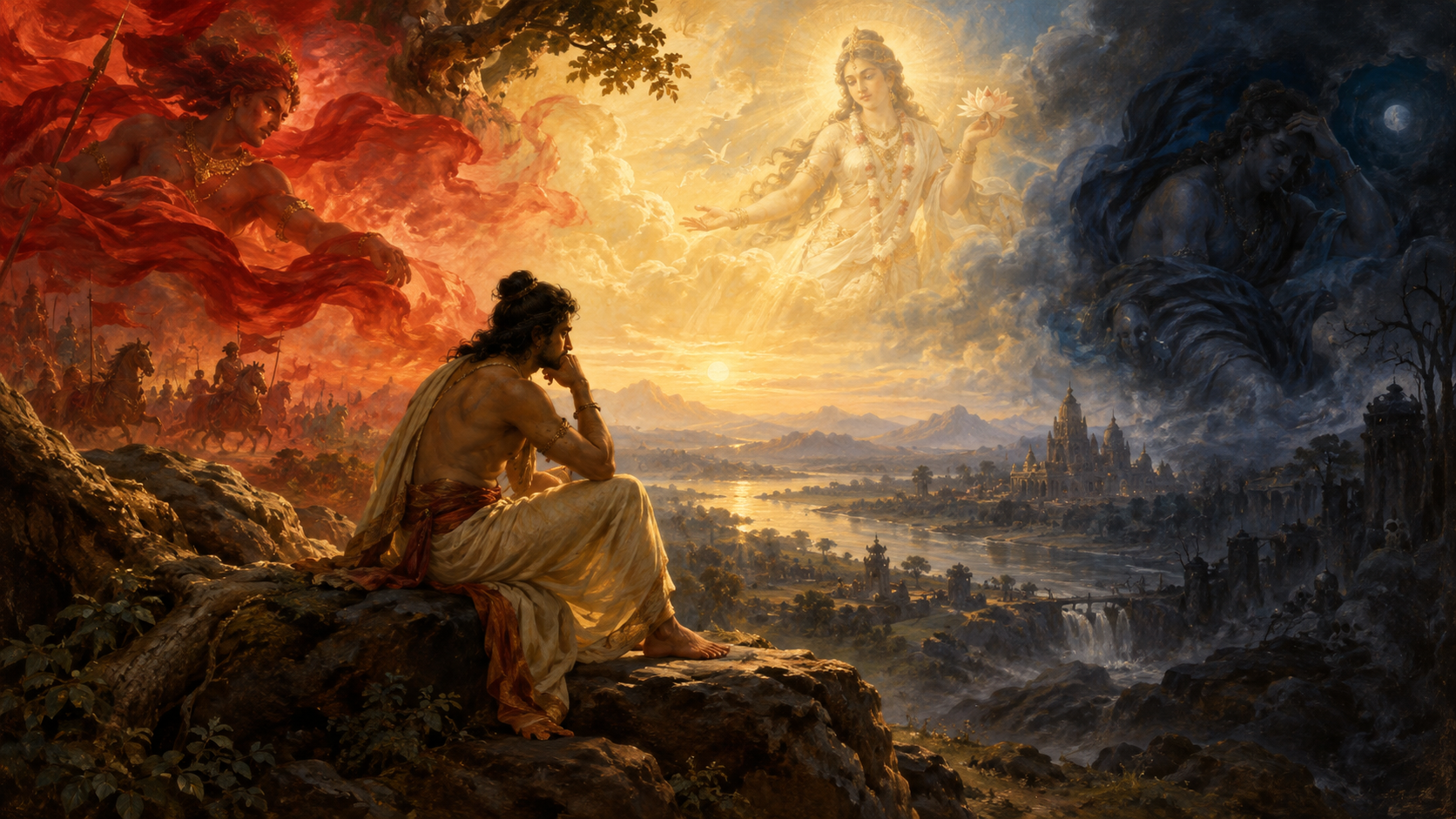
Śrīmad Bhagavad Gītā · Chapter 14
The Three Qualities of Nature
guṇatrayavibhāgayōgaḥ
Hover over a Sanskrit word for a reading note. Click to keep it open.Tap a Sanskrit word for a reading note. Tap again or scroll to close.
ōṃ śrī paramātmanē namaḥ
Om. Salutations to the Supreme Self.
śrībhagavānuvācha ।
paraṃ bhūyaḥ pravakṣyāmi jñānānāṃ jñānamuttamam ।
yajjñātvā munayaḥ sarvē parāṃ siddhimitō gatāḥ ॥ 1 ॥
The Blessed Lord said:
I will again proclaim that supreme Wisdom, of all wisdom the best, which having known, all the Sages have gone hence to the supreme Perfection.
idaṃ jñānamupāśritya mama sādharmyamāgatāḥ ।
sargē'pi nōpajāyantē pralayē na vyathanti cha ॥ 2 ॥
Having taken refuge in this Wisdom and being assimilated to My own nature, they are not re-born even in the emanation of a universe, nor are disquieted in the dissolution.
mama yōnirmahadbrahma tasmingarbhaṃ dadhāmyaham ।
sambhavaḥ sarvabhūtānāṃ tatō bhavati bhārata ॥ 3 ॥
My womb is the great Eternal; in that I place the germ; thence cometh the birth of all beings, O Bhârata.
sarvayōniṣu kauntēya mūrtayaḥ sambhavanti yāḥ ।
tāsāṃ brahma mahadyōnirahaṃ bījapradaḥ pitā ॥ 4 ॥
In whatsoever wombs mortals are produced, O Kaunteya, the great Eternal is their womb, I their generating father.
sattvaṃ rajastama iti guṇāḥ prakṛtisambhavāḥ ।
nibadhnanti mahābāhō dēhē dēhinamavyayam ॥ 5 ॥
Harmony, Motion, Inertia, such are the qualities, Matter-born; they bind fast in the body, O great-armed one, the indestructible dweller in the body.
tatra sattvaṃ nirmalatvātprakāśakamanāmayam ।
sukhasaṅgēna badhnāti jñānasaṅgēna chānagha ॥ 6 ॥
Of these Harmony from its stainlessness, luminous and healthy, bindeth by the attachment to bliss and the attachment to wisdom, O sinless one.
rajō rāgātmakaṃ viddhi tṛṣṇāsaṅgasamudbhavam ।
tannibadhnāti kauntēya karmasaṅgēna dēhinam ॥ 7 ॥
Motion, the passion nature, know thou, is the source of attachment and thirst for life, O Kaunteya, that bindeth the dweller in the body by the attachment to action.
tamastvajñānajaṃ viddhi mōhanaṃ sarvadēhinām ।
pramādālasyanidrābhistannibadhnāti bhārata ॥ 8 ॥
But Inertia, know thou, born of unwisdom, is the deluder of all dwellers in the body; that bindeth by heedlessness, indolence and sloth, O Bharata.
sattvaṃ sukhē sañjayati rajaḥ karmaṇi bhārata ।
jñānamāvṛtya tu tamaḥ pramādē sañjayatyuta ॥ 9 ॥
Harmony attacheth to bliss, Motion to action O Bharata. Inertia, verily, having shrouded wisdom, attacheth on the contrary to heedlessness.
rajastamaśchābhibhūya sattvaṃ bhavati bhārata ।
rajaḥ sattvaṃ tamaśchaiva tamaḥ sattvaṃ rajastathā ॥ 10 ॥
Now Harmony prevaileth, having overpowered Motion and Inertia, O Bhârata; now Motion, having overpowered Harmony and Inertia; and now Inertia, having overpowered Harmony and Motion.
sarvadvārēṣu dēhē'sminprakāśa upajāyatē ।
jñānaṃ yadā tadā vidyādvivṛddhaṃ sattvamityuta ॥ 11 ॥
When the wisdom-light streameth forth from all the gates of the body, then it may be known that Harmony is increasing.
lōbhaḥ pravṛttirārambhaḥ karmaṇāmaśamaḥ spṛhā ।
rajasyētāni jāyantē vivṛddhē bharatarṣabha ॥ 12 ॥
Greed, outgoing energy, undertaking of actions, restlessness, desire—these are born of the increase of Motion, O best of the Bhâratas.
aprakāśō'pravṛttiścha pramādō mōha ēva cha ।
tamasyētāni jāyantē vivṛddhē kurunandana ॥ 13 ॥
Darkness, stagnation and heedlessness and also delusion—these are born of the increase of Inertia, O joy of the Kurus.
yadā sattvē pravṛddhē tu pralayaṃ yāti dēhabhṛt ।
tadōttamavidāṃ lōkānamalānpratipadyatē ॥ 14 ॥
If Harmony verily prevaileth when the embodied goeth to dissolution, then he goeth forth to the spotless worlds of the great Sages.
rajasi pralayaṃ gatvā karmasaṅgiṣu jāyatē ।
tathā pralīnastamasi mūḍhayōniṣu jāyatē ॥ 15 ॥
Having gone to dissolution in Motion, he is born among those attached to action; if dissolved in Inertia, he is born in the wombs of the senseless.
karmaṇaḥ sukṛtasyāhuḥ sāttvikaṃ nirmalaṃ phalam ।
rajasastu phalaṃ duḥkhamajñānaṃ tamasaḥ phalam ॥ 16 ॥
It is said the fruit of a good action is harmonious and spotless; verily the fruit of Motion is pain, and the fruit of Inertia unwisdom
sattvātsañjāyatē jñānaṃ rajasō lōbha ēva cha ।
pramādamōhau tamasō bhavatō'jñānamēva cha ॥ 17 ॥
From Harmony wisdom is born, and also greed from Motion; heedlessness and delusion are of Inertia and also unwisdom.
ūrdhvaṃ gachChanti sattvasthā madhyē tiṣṭhanti rājasāḥ ।
jaghanyaguṇavṛttisthā adhō gachChanti tāmasāḥ ॥ 18 ॥
They rise upwards who are settled in Harmony; the Active dwell in the mid-most place: the Inert go downwards, enveloped in the vilest
nānyaṃ guṇēbhyaḥ kartāraṃ yadā draṣṭānupaśyati ।
guṇēbhyaścha paraṃ vētti madbhāvaṃ sō'dhigachChati ॥ 19 ॥
When the Seer perceiveth no agent other than the qualities, and knoweth That which is higher than the qualities, he entereth into My Nature.
guṇānētānatītya trīndēhī dēhasamudbhavān ।
janmamṛtyujarāduḥkhairvimuktō'mṛtamaśnutē ॥ 20 ॥
When the dweller in the body hath crossed over these three qualities, whence all bodies have been produced, liberated from birth, death, old age and sorrow, he drinketh the nectar of immortality.
arjuna uvācha ।
kairliṅgaistrīnguṇānētānatītō bhavati prabhō ।
kimāchāraḥ kathaṃ chaitāṃstrīnguṇānativartatē ॥ 21 ॥
Arjuna said:
What are the marks of him who hath crossed over the three qualities, O Lord? How acteth he, and how doth he go beyond these three qualities?
śrībhagavānuvācha ।
prakāśaṃ cha pravṛttiṃ cha mōhamēva cha pāṇḍava ।
ta dvēṣṭi sampravṛttāni na nivṛttāni kāṅkṣati ॥ 22 ॥
The Blessed Lord said:
He, O Pândava, who hateth not radiance, nor outgoing energy, nor even delusion, when present, nor longeth after them, absent;
udāsīnavadāsīnō guṇairyō na vichālyatē ।
guṇā vartanta ityēva yō'vatiṣṭhati nēṅgatē ॥ 23 ॥
He who, seated as a neutral, is unshaken by the qualities; who, saying, "The qualities revolve," standeth apart immovable.
samaduḥkhasukhaḥ svasthaḥ samalōṣṭāśmakāñchanaḥ ।
tulyapriyāpriyō dhīrastulyanindātmasaṃstutiḥ ॥ 24 ॥
Balanced in pleasure and pain, self-reliant, to whom a lump of earth, a rock and gold are alike, the same to loved and unloved, firm, the same in censure and in praise,
mānāpamānayōstulyastulyō mitrāripakṣayōḥ ।
sarvārambhaparityāgī guṇātītaḥ sa uchyatē ॥ 25 ॥
The same in honour and ignominy, the same to friend and foe, abandoning all undertakings—he is said to have crossed over the qualities.
māṃ cha yō'vyabhichārēṇa bhaktiyōgēna sēvatē ।
sa guṇānsamatītyaitānbrahmabhūyāya kalpatē ॥ 26 ॥
And he who serveth Me exclusively by the Yoga of devotion, he, crossing beyond the qualities, he is fit to become the Eternal.
brahmaṇō hi pratiṣṭhāhamamṛtasyāvyayasya cha ।
śāśvatasya cha dharmasya sukhasyaikāntikasya cha ॥ 27 ॥
For I am the abode of the Eternal, and of the indestructible nectar of immortality, of immemorial righteousness, and of unending bliss.
Sanskrit text and numbering: Vaidika Vignanam · Chapter 14. English: Annie Besant, 1922 edition (public domain). Reading notes are original, AI-assisted editorial aids, not traditional commentary.
About the text & artwork