Śrīmad Bhagavad Gītā · Chapter 15
The Supreme Person
puruṣōttamaprāptiyōgaḥ
Hover over a Sanskrit word for a reading note. Click to keep it open.Tap a Sanskrit word for a reading note. Tap again or scroll to close.
ōṃ śrī paramātmanē namaḥ
Om. Salutations to the Supreme Self.
śrībhagavānuvācha ।
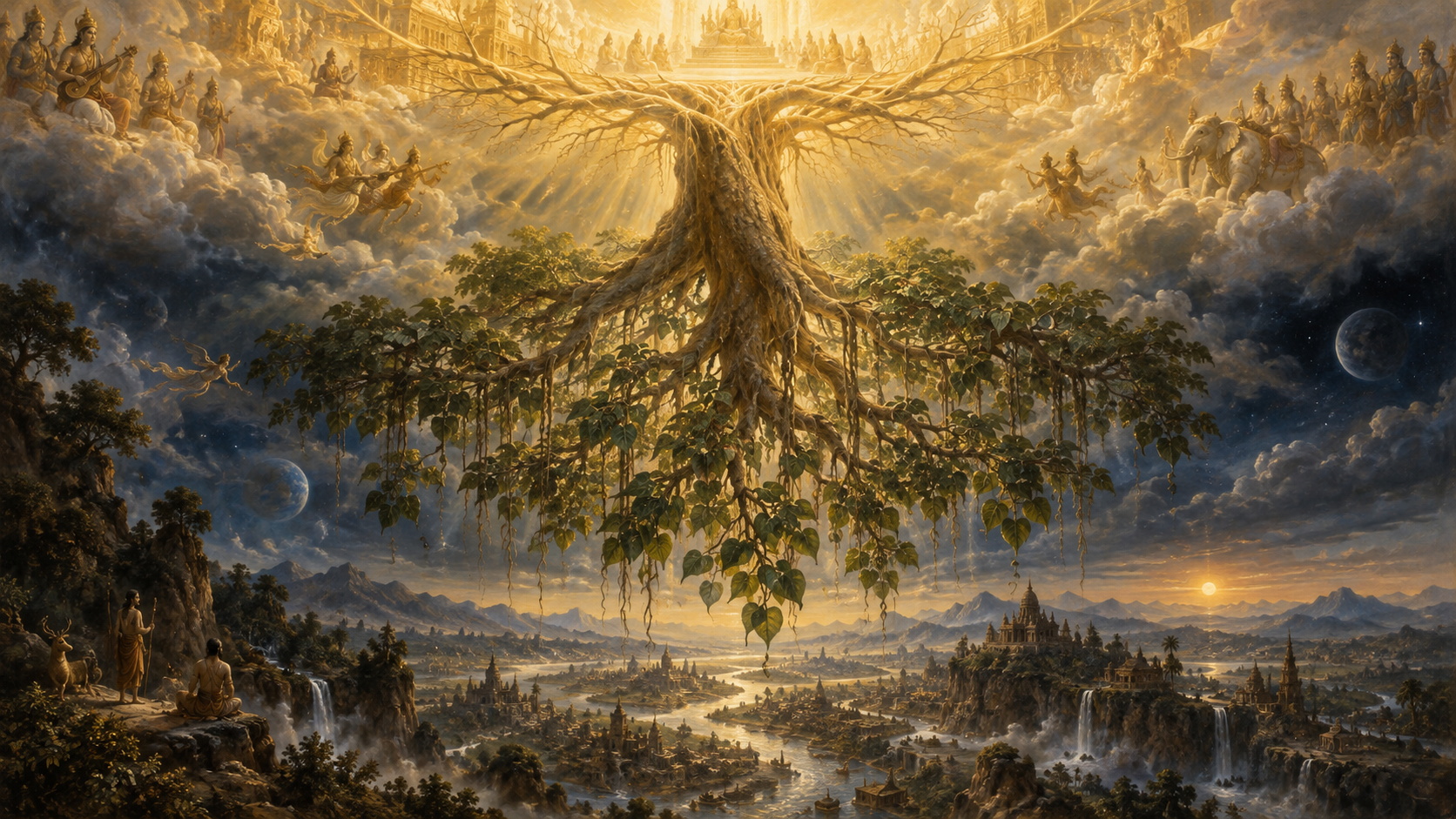
ūrdhvamūlamadhaḥśākhamaśvatthaṃ prāhuravyayam ।
Chandāṃsi yasya parṇāni yastaṃ vēda sa vēdavit ॥ 1 ॥
The Blessed Lord said:
With roots above, branches below, the Asvattha is said to be indestructible; the leaves of it are hymns; he who knoweth it is a Veda-knower.
adhaśchōrdhvaṃ prasṛtāstasya śākhā guṇapravṛddhā viṣayapravālāḥ।
adhaścha mūlānyanusantatāni karmānubandhīni manuṣyalōkē ॥ 2 ॥
Downwards and upwards spread the branches of it, nourished by the qualities; the objects of the senses its buds; and its roots grow downwards, the bonds of action in the world of men.
na rūpamasyēha tathōpalabhyatē nāntō na chādirna cha sampratiṣṭhā।
aśvatthamēnaṃ suvirūḍhamūlamasaṅgaśastrēṇa dṛḍhēna Chittvā ॥ 3 ॥
Nor here may be acquired knowledge of its form, nor its end, nor its origin, nor its rooting-place; this strongly rooted Asvattha having been cut down by the unswerving weapon of non-attachment,
tataḥ padaṃ tatparimārgitavyaṃ yasmingatā na nivartanti bhūyaḥ।
tamēva chādyaṃ puruṣaṃ prapadyē yataḥ pravṛttiḥ prasṛtā purāṇī ॥ 4 ॥
That path beyond may be sought, treading which there is no return. I go indeed to that Primal Man, whence the ancient energy forth-streamed.
nirmānamōhā jitasaṅgadōṣā adhyātmanityā vinivṛttakāmāḥ।
dvandvairvimuktāḥ sukhaduḥkhasañjñairgachChantyamūḍhāḥ padamavyayaṃ tat ॥ 5 ॥
Without pride and delusion, victorious over the vice of attachment, dwelling constantly in the Self, desire pacified, liberated from the pairs of opposites known as pleasure and pain, they tread, undeluded, that indestructible path.
na tadbhāsayatē sūryō na śaśāṅkō na pāvakaḥ ।
yadgatvā na nivartantē taddhāma paramaṃ mama ॥ 6 ॥
Nor doth the sun lighten there, nor moon, nor fire; having gone thither they return not; that is My supreme abode.
mamaivāṃśō jīvalōkē jīvabhūtaḥ sanātanaḥ ।
manaḥṣaṣṭhānīndriyāṇi prakṛtisthāni karṣati ॥ 7 ॥
A portion of Mine own Self, transformed in the world of life into an immortal Spirit, draweth round itself the senses of which the mind is the sixth, veiled in matter.
śarīraṃ yadavāpnōti yachchāpyutkrāmatīśvaraḥ ।
gṛhītvaitāni saṃyāti vāyurgandhānivāśayāt ॥ 8 ॥
When the Lord acquireth a body and when He abandoneth it, He seizeth these and goeth with them, as the wind takes fragrances from their retreats
śrōtraṃ chakṣuḥ sparśanaṃ cha rasanaṃ ghrāṇamēva cha ।
adhiṣṭhāya manaśchāyaṃ viṣayānupasēvatē ॥ 9 ॥
Enshrined in the ear, the eye, the touch, the taste and the smell, and in the mind also, He enjoyeth the objects of the senses
utkrāmantaṃ sthitaṃ vāpi bhuñjānaṃ vā guṇānvitam ।
vimūḍhā nānupaśyanti paśyanti jñānachakṣuṣaḥ ॥ 10 ॥
The deluded do not perceive (Him) when He departeth or stayeth or enjoyeth, swayed by the qualities; the wisdom-eyed perceive.
yatantō yōginaśchainaṃ paśyantyātmanyavasthitam ।
yatantō'pyakṛtātmānō nainaṃ paśyantyachētasaḥ ॥ 11 ॥
Yogîs also, struggling, perceive Him, established in the Self; but though struggling, the unintelligent perceive Him not, their selves untrained.
yadādityagataṃ tējō jagadbhāsayatē'khilam ।
yachchandramasi yachchāgnau tattējō viddhi māmakam ॥ 12 ॥
That splendour issuing from the sun that enlighteneth the whole world, that which is in the moon and in fire, that splendour know as from Me.
gāmāviśya cha bhūtāni dhārayāmyahamōjasā ।
puṣṇāmi chauṣadhīḥ sarvāḥ sōmō bhūtvā rasātmakaḥ ॥ 13 ॥
Permeating the soil, I support beings by my vital energy, and having become the delicious Soma I nourish all plants.
ahaṃ vaiśvānarō bhūtvā prāṇināṃ dēhamāśritaḥ ।
prāṇāpānasamāyuktaḥ pachāmyannaṃ chaturvidham ॥ 14 ॥
I, having become the Fire of Life, take possession of the bodies of breathing things, and united with the life-breaths, I digest the four kinds of food.
sarvasya chāhaṃ hṛdi sanniviṣṭō mattaḥ smṛtirjñānamapōhanaṃ cha।
vēdaiścha sarvairahamēva vēdyō vēdāntakṛdvēdavidēva chāham ॥ 15 ॥
And I am seated in the hearts of all, and from Me memory and wisdom and their absence. And that which is to be known in all the Vedas am I; and I indeed the Veda-knower and the author of the Vedanta.
dvāvimau puruṣau lōkē kṣaraśchākṣara ēva cha ।
kṣaraḥ sarvāṇi bhūtāni kūṭasthō'kṣara uchyatē ॥ 16 ॥
There are two Energies in this world, the destructible and the indestructible; the destructible is all beings, the unchanging is called the indestructible.
uttamaḥ puruṣastvanyaḥ paramātmētyudhāhṛtaḥ ।
yō lōkatrayamāviśya bibhartyavyaya īśvaraḥ ॥ 17 ॥
The highest Energy is verily Another, declared as the Supreme Self, He who, pervading all, sustaineth the three worlds, the indestructible Lord.
yasmātkṣaramatītō'hamakṣarādapi chōttamaḥ ।
atō'smi lōkē vēdē cha prathitaḥ puruṣōttamaḥ ॥ 18 ॥
Since I excel the destructible, and am more excellent also than the indestructible, in the world and in the Veda I am proclaimed the Supreme Spirit.
yō māmēvamasammūḍhō jānāti puruṣōttamam ।
sa sarvavidbhajati māṃ sarvabhāvēna bhārata ॥ 19 ॥
He who undeluded knoweth Me thus as the Supreme Spirit, he, all-knowing, worshippeth Me with his whole being, O Bhârata.
iti guhyatamaṃ śāstramidamuktaṃ mayānagha ।
ētadbuddhvā buddhimānsyātkṛtakṛtyaścha bhārata ॥ 20 ॥
Thus by Me this most secret teaching hath been told O sinless one. This known, he hath become illuminated and hath finished his work, O Bhârata.
Sanskrit text and numbering: Vaidika Vignanam · Chapter 15. English: Annie Besant, 1922 edition (public domain). Reading notes are original, AI-assisted editorial aids, not traditional commentary.
About the text & artwork