Śrīmad Bhagavad Gītā · Chapter 5
The Yoga of Renunciation
karmasannyāsayōgaḥ
Hover over a Sanskrit word for a reading note. Click to keep it open.Tap a Sanskrit word for a reading note. Tap again or scroll to close.
ōṃ śrī paramātmanē namaḥ
Om. Salutations to the Supreme Self.
arjuna uvācha ।
sannyāsaṃ karmaṇāṃ kṛṣṇa punaryōgaṃ cha śaṃsasi ।
yachChrēya ētayōrēkaṃ tanmē brūhi suniśchitam ॥ 1 ॥
Arjuna said:
Renunciation of actions Thou praisest, O Krishna, and then also yoga. Of the two which one is the better? That tell me conclusively.
śrībhagavānuvācha ।
sannyāsaḥ karmayōgaścha niḥśrēyasakarāvubhau ।
tayōstu karmasannyāsātkarmayōgō viśiṣyatē ॥ 2 ॥
The Blessed Lord said:
Renunciation and yoga by action both lead to the highest bliss; of the two, yoga by action is verily better than renunciation of action.
jñēyaḥ sa nityasannyāsī yō na dvēṣṭi na kāṅkṣati ।
nirdvandvō hi mahābāhō sukhaṃ bandhātpramuchyatē ॥ 3 ॥
He should be known as a perpetual ascetic, who neither hateth nor desireth; free from the pairs of opposites, O mighty-armed, he is easily set free from bondage.
sāṅkhyayōgau pṛthagbālāḥ pravadanti na paṇḍitāḥ ।
ēkamapyāsthitaḥ samyagubhayōrvindatē phalam ॥ 4 ॥
Children, not sages, speak of the Sânkhya and the Yoga as different; he who is duly established in one obtaineth the fruits of both.
yatsāṅkhyaiḥ prāpyatē sthānaṃ tadyōgairapi gamyatē ।
ēkaṃ sāṅkhyaṃ cha yōgaṃ cha yaḥ paśyati sa paśyati ॥ 5 ॥
That place which is gained by the Sânkhyas is reached by the Yogîs also. He seeth, who seeth that the Sânkhya and the Yoga are one.
sannyāsastu mahābāhō duḥkhamāptumayōgataḥ ।
yōgayuktō munirbrahma nachirēṇādhigachChati ॥ 6 ॥
But without yoga, O mighty-armed, renunciation is hard to attain to; the yoga-harmonised Muni swiftly goeth to the Eternal.
yōgayuktō viśuddhātmā vijitātmā jitēndriyaḥ ।
sarvabhūtātmabhūtātmā kurvannapi na lipyatē ॥ 7 ॥
He who is harmonised by yoga, the self purified, Self-ruled, the senses subdued, whose Self is the Self of all beings, although acting he is not affected.
naiva kiñchitkarōmīti yuktō manyēta tattvavit ।
paśyañśṛṇvanspṛśañjighrannaśnangachChansvapañśvasan ॥ 8 ॥
"I do not anything," should think the harmonised one, who knoweth the essence of things; seeing, hearing, touching, smelling, eating, moving, sleeping, breathing.
pralapanvisṛjangṛhṇannunmiṣannimiṣannapi ।
indriyāṇīndriyārthēṣu vartanta iti dhārayan ॥ 9 ॥
Speaking, giving, grasping, opening and closing the eyes, he holdeth: "The senses move among the objects of the senses."
brahmaṇyādhāya karmāṇi saṅgaṃ tyaktvā karōti yaḥ ।
lipyatē na sa pāpēna padmapatramivāmbhasā ॥ 10 ॥
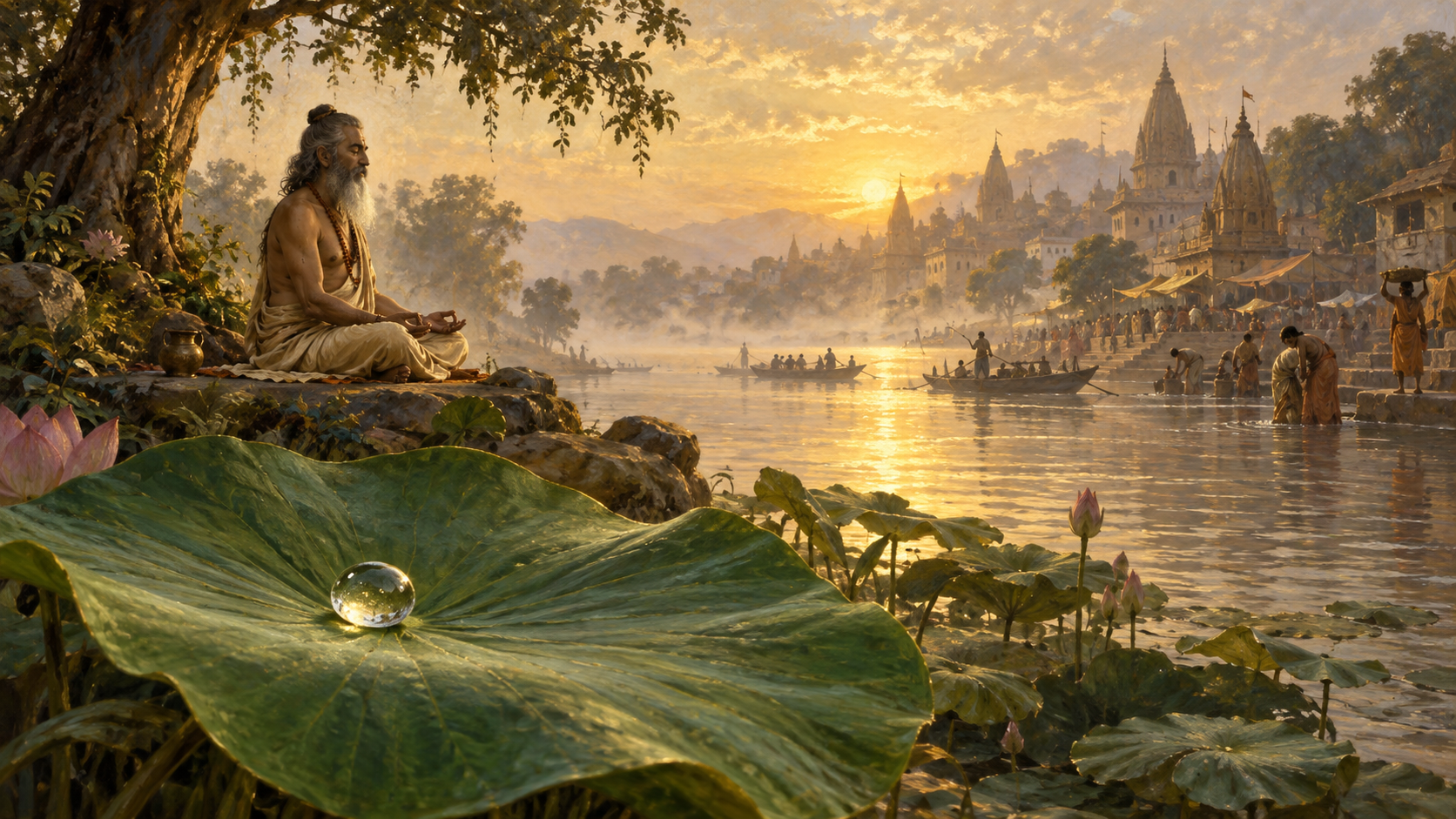
He who acteth, placing all actions in the Eternal, abandoning attachment, is unaffected by sin as a lotus leaf by the waters.
kāyēna manasā buddhyā kēvalairindriyairapi ।
yōginaḥ karma kurvanti saṅgaṃ tyaktvātmaśuddhayē ॥ 11 ॥
Yogis, having abandoned attachment, perform action only by the body, by the mind, by the Reason, and even by the senses, for the purification of the self.
yuktaḥ karmaphalaṃ tyaktvā śāntimāpnōti naiṣṭhikīm ।
ayuktaḥ kāmakārēṇa phalē saktō nibadhyatē ॥ 12 ॥
The harmonised man, having abandoned the fruit of action, attaineth to the eternal Peace; the non-harmonised, impelled by desire, attached to fruit, are bound.
sarvakarmāṇi manasā sannyasyāstē sukhaṃ vaśī ।
navadvārē purē dēhī naiva kurvanna kārayan ॥ 13 ॥
Mentally renouncing all actions, the sovereign dweller in the body resteth serenely in the nine-gated city, neither acting nor causing to act.
na kartṛtvaṃ na karmāṇi lōkasya sṛjati prabhuḥ ।
na karmaphalasaṃyōgaṃ svabhāvastu pravartatē ॥ 14 ॥
The Lord of the world produceth not the idea of agency, nor actions, nor the union together of action and its fruit; nature, however, manifesteth.
nādattē kasyachitpāpaṃ na chaiva sukṛtaṃ vibhuḥ ।
ajñānēnāvṛtaṃ jñānaṃ tēna muhyanti jantavaḥ ॥ 15 ॥
The Lord accepteth neither the evil-doing nor yet the well-doing of any. Wisdom is enveloped by unwisdom; therewith mortals are deluded.
jñānēna tu tadajñānaṃ yēṣāṃ nāśitamātmanaḥ ।
tēṣāmādityavajjñānaṃ prakāśayati tatparam ॥ 16 ॥
Verily, in whom unwisdom is destroyed by the wisdom of the Self, in them wisdom, shining as the sun, reveals the Supreme.
tadbuddhayastadātmānastanniṣṭhāstatparāyaṇāḥ ।
gachChantyapunarāvṛttiṃ jñānanirdhūtakalmaṣāḥ ॥ 17 ॥
Thinking on That, merged in That, established in That, solely devoted to That, they go whence there is no return, their sins dispelled by wisdom.
vidyāvinayasampannē brāhmaṇē gavi hastini ।
śuni chaiva śvapākē cha paṇḍitāḥ samadarśinaḥ ॥ 18 ॥
Sages look equally on a Brâhmana adorned with learning and humility, a cow, an elephant, and even a dog and an outcaste.
ihaiva tairjitaḥ sargō yēṣāṃ sāmyē sthitaṃ manaḥ ।
nirdōṣaṃ hi samaṃ brahma tasmādbrahmaṇi tē sthitāḥ ॥ 19 ॥
Even here on earth everything is overcome by those whose mind remains balanced; the Eternal is incorruptible and balanced; therefore they are established in the Eternal.
na prahṛṣyētpriyaṃ prāpya nōdvijētprāpya chāpriyam ।
sthirabuddhirasammūḍhō brahmavidbrahmaṇi sthitaḥ ॥ 20 ॥
With Reason firm, unperplexed, the knower of the Eternal established in the Eternal, neither rejoiceth on obtaining what is pleasant, nor sorroweth on obtaining what is unpleasant.
bāhyasparśēṣvasaktātmā vindatyātmani yatsukham ।
sa brahmayōgayuktātmā sukhamakṣayamaśnutē ॥ 21 ॥
He, whose self is unattached to external contacts and findeth joy in the Self, having the self harmonised with the Eternal by yoga, enjoys imperishable bliss.
yē hi saṃsparśajā bhōgā duḥkhayōnaya ēva tē ।
ādyantavantaḥ kauntēya na tēṣu ramatē budhaḥ ॥ 22 ॥
The delights that are contact-born, they are verily wombs of pain, for they have beginning and ending, O Kaunteya; not in them may rejoice the wise.
śaknōtīhaiva yaḥ sōḍhuṃ prākśarīravimōkṣaṇāt ।
kāmakrōdhōdbhavaṃ vēgaṃ sa yuktaḥ sa sukhī naraḥ ॥ 23 ॥
He who is able to endure here on earth, ere he be liberated from the body, the force born from desire and passion, he is harmonised, he is a happy man.
yō'ntaḥsukhō'ntarārāmastathāntarjyōtirēva yaḥ ।
sa yōgī brahmanirvāṇaṃ brahmabhūtō'dhigachChati ॥ 24 ॥
He who is happy within, who rejoiceth within, who is illuminated within, that Yogî, becoming the Eternal, goeth to the Peace of the Eternal.
labhantē brahmanirvāṇamṛṣayaḥ kṣīṇakalmaṣāḥ ।
Chinnadvaidhā yatātmānaḥ sarvabhūtahitē ratāḥ ॥ 25 ॥
Rishis, their sins destroyed, their duality removed, their selves controlled, intent upon the welfare of all beings, obtain the Peace of the Eternal.
kāmakrōdhaviyuktānāṃ yatīnāṃ yatachētasām ।
abhitō brahmanirvāṇaṃ vartatē viditātmanām ॥ 26 ॥
The Peace of the Eternal lies near to those who know themselves, who are disjoined from desire and passion, subdued in nature, of subdued thoughts.
sparśānkṛtvā bahirbāhyāṃśchakṣuśchaivāntarē bhruvōḥ ।
prāṇāpānau samau kṛtvā nāsābhyantarachāriṇau ॥ 27 ॥
Having external contacts excluded, and with gaze fixed between the eyebrows; having made equal the outgoing and ingoing breaths moving within the nostrils;
yatēndriyamanōbuddhirmunirmōkṣaparāyaṇaḥ ।
vigatēchChābhayakrōdhō yaḥ sadā mukta ēva saḥ ॥ 28 ॥
With senses, mind, and Reason ever controlled, solely pursuing liberation, the Sage, having for ever cast away desire, fear and passion, verily is liberated.
bhōktāraṃ yajñatapasāṃ sarvalōkamahēśvaram ।
suhṛdaṃ sarvabhūtānāṃ jñātvā māṃ śāntimṛchChati ॥ 29 ॥
Having known Me, as the Enjoyer of sacrifice and of austerity, the mighty Ruler of all the worlds, and the Lover of all beings, he goeth to Peace.
Sanskrit text and numbering: Vaidika Vignanam · Chapter 5. English: Annie Besant, 1922 edition (public domain). Reading notes are original, AI-assisted editorial aids, not traditional commentary.
About the text & artwork