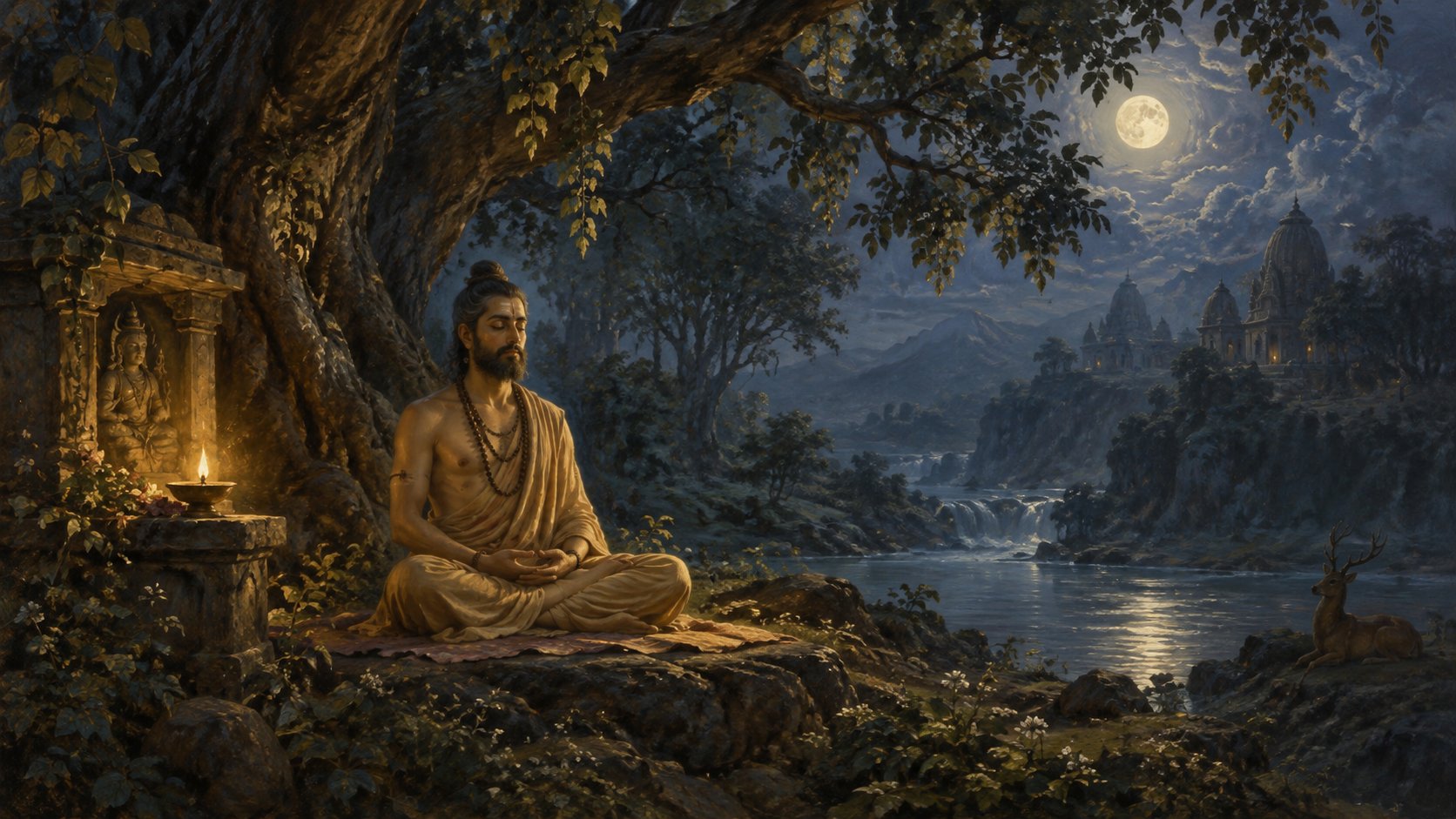
Śrīmad Bhagavad Gītā · Chapter 6
The Yoga of Meditation
ātmasaṃyamayōgaḥ
Hover over a Sanskrit word for a reading note. Click to keep it open.Tap a Sanskrit word for a reading note. Tap again or scroll to close.
ōṃ śrī paramātmanē namaḥ
Om. Salutations to the Supreme Self.
śrībhagavānuvācha ।
anāśritaḥ karmaphalaṃ kāryaṃ karma karōti yaḥ ।
sa sannyāsī cha yōgī cha na niragnirna chākriyaḥ ॥ 1 ॥
The Blessed Lord said:
He that performeth such action as his duty, independently of the fruit of action, he is an ascetic, he is a Yogî, not he that is without fire, and without rites.
yaṃ sannyāsamiti prāhuryōgaṃ taṃ viddhi pāṇḍava ।
na hyasannyastasaṅkalpō yōgī bhavati kaśchana ॥ 2 ॥
That which is called renunciation, know thou that as yoga, O Pândava; nor doth any one become a Yogî with the formative will unrenounced.
ārurukṣōrmunēryōgaṃ karma kāraṇamuchyatē ।
yōgārūḍhasya tasyaiva śamaḥ kāraṇamuchyatē ॥ 3 ॥
For a Sage who is seeking Yoga, action is called the means; for the same Sage, when he is enthroned in yoga, serenity is called the means.
yadā hi nēndriyārthēṣu na karmasvanuṣajjatē ।
sarvasaṅkalpasannyāsī yōgārūḍhastadōchyatē ॥ 4 ॥
When a man feeleth no attachment either for the objects of sense or for actions, renouncing the formative will, then, he is said to be enthroned in yoga.
uddharēdātmanātmānaṃ nātmānamavasādayēt ।
ātmaiva hyātmanō bandhurātmaiva ripurātmanaḥ ॥ 5 ॥
Let him raise the self by the Self and not let the self become depressed; for verily is the Self the friend of the self, and also the Self the self's enemy;
bandhurātmātmanastasya yēnātmaivātmanā jitaḥ ।
anātmanastu śatrutvē vartētātmaiva śatruvat ॥ 6 ॥
The Self is the friend of the self of him in whom the self by the Self is vanquished; but to the unsubdued self the Self verily becometh hostile as an enemy.
jitātmanaḥ praśāntasya paramātmā samāhitaḥ ।
śītōṣṇasukhaduḥkhēṣu tathā mānāpamānayōḥ ॥ 7 ॥
The higher Self of him who is Self-controlled and peaceful is uniform in cold and heat, pleasure and pain, as well as in honour and dishonour.
jñānavijñānatṛptātmā kūṭasthō vijitēndriyaḥ ।
yukta ityuchyatē yōgī samalōṣṭāśmakāñchanaḥ ॥ 8 ॥
The Yogî who is satisfied with wisdom and knowledge, unwavering, whose senses are subdued, to whom a lump of earth, a stone and gold are the same, is said to be harmonised.
suhṛnmitrāryudāsīnamadhyasthadvēṣyabandhuṣu ।
sādhuṣvapi cha pāpēṣu samabuddhirviśiṣyatē ॥ 9 ॥
He who regards impartially lovers, friends, and foes, strangers, neutrals, foreigners and relatives, also the righteous and unrighteous, he excelleth.
yōgī yuñjīta satatamātmānaṃ rahasi sthitaḥ ।
ēkākī yatachittātmā nirāśīraparigrahaḥ ॥ 10 ॥
Let the Yogî constantly engage himself in yoga, remaining in a secret place by himself, with thought and self subdued, free from hope and greed.
śuchau dēśē pratiṣṭhāpya sthiramāsanamātmanaḥ ।
nātyuchChritaṃ nātinīchaṃ chailājinakuśōttaram ॥ 11 ॥
In a pure place, established on a fixed seat of his own, neither very much raised nor very low, made of a cloth, a black antelope skin, and kusha grass, one over the other;
tatraikāgraṃ manaḥ kṛtvā yatachittēndriyakriyaḥ ।
upaviśyāsanē yuñjyādyōgamātmaviśuddhayē ॥ 12 ॥
There, having made the mind one-pointed, with thought and the functions of the senses subdued, steady on his seat, he should practise yoga for the purification of the self.
samaṃ kāyaśirōgrīvaṃ dhārayannachalaṃ sthiraḥ ।
samprēkṣya nāsikāgraṃ svaṃ diśaśchānavalōkayan ॥ 13 ॥
Holding the body, head and neck erect, immovably steady, looking fixedly at the point of the nose, with unseeing gaze,
praśāntātmā vigatabhīrbrahmachārivratē sthitaḥ ।
manaḥ saṃyamya machchittō yukta āsīta matparaḥ ॥ 14 ॥
The self serene, fearless, firm in the vow of the Brahmachâri, the mind controlled, thinking on Me, harmonised, let him sit aspiring after Me.
yuñjannēvaṃ sadātmānaṃ yōgī niyatamānasaḥ ।
śāntiṃ nirvāṇaparamāṃ matsaṃsthāmadhigachChati ॥ 15 ॥
The Yogî ever united thus with the Self, with the mind controlled, goeth to Peace, to the supreme Bliss that abideth in Me.
nātyaśnatastu yōgō'sti na chaikāntamanaśnataḥ ।
na chātisvapnaśīlasya jāgratō naiva chārjuna ॥ 16 ॥
Verily yoga is not for him who eateth too much, nor who abstaineth to excess, nor who is too much addicted to sleep, nor even to wakefulness, O Arjuna.
yuktāhāravihārasya yuktachēṣṭasya karmasu ।
yuktasvapnāvabōdhasya yōgō bhavati duḥkhahā ॥ 17 ॥
Yoga killeth out all pain for him who is regulated in eating and amusement, regulated in performing actions, regulated in sleeping and waking.
yadā viniyataṃ chittamātmanyēvāvatiṣṭhatē ।
niḥspṛhaḥ sarvakāmēbhyō yukta ityuchyatē tadā ॥ 18 ॥
When his subdued thought is fixed on the Self, free from longing after all desirable things, then it is said, "he is harmonised."
yathā dīpō nivātasthō nēṅgatē sōpamā smṛtā ।
yōginō yatachittasya yuñjatō yōgamātmanaḥ ॥ 19 ॥
As a lamp in a windless place flickereth not, to such is likened the Yogî of subdued thought, absorbed in the yoga of the Self.
yatrōparamatē chittaṃ niruddhaṃ yōgasēvayā ।
yatra chaivātmanātmānaṃ paśyannātmani tuṣyati ॥ 20 ॥
That in which the mind finds rest, quieted by the practice of yoga: that in which he, seeing the Self by the Self, in the Self is satisfied;
sukhamātyantikaṃ yattadbuddhigrāhyamatīndriyam ।
vētti yatra na chaivāyaṃ sthitaśchalati tattvataḥ ॥ 21 ॥
That in which he findeth the supreme delight which the Reason can grasp beyond the senses, wherein established he moveth not from the Reality;
yaṃ labdhvā chāparaṃ lābhaṃ manyatē nādhikaṃ tataḥ ।
yasminsthitō na duḥkhēna guruṇāpi vichālyatē ॥ 22 ॥
Which, having obtained, he thinketh there is no greater gain beyond it; wherein, established, he is not shaken even by heavy sorrow;
taṃ vidyādduḥkhasaṃyōgaviyōgaṃ yōgasañjñitam ।
sa niśchayēna yōktavyō yōgō'nirviṇṇachētasā ॥ 23 ॥
That should be known by the name of yoga, this disconnection from the union with pain. This yoga must be clung to with a firm conviction and with undesponding mind.
saṅkalpaprabhavānkāmāṃstyaktvā sarvānaśēṣataḥ ।
manasaivēndriyagrāmaṃ viniyamya samantataḥ ॥ 24 ॥
Abandoning without reserve all desires born of the imagination, by the mind curbing in the aggregate of the senses on every side,
śanaiḥ śanairuparamēdbuddhyā dhṛtigṛhītayā ।
ātmasaṃsthaṃ manaḥ kṛtvā na kiñchidapi chintayēt ॥ 25 ॥
Little by little let him gain tranquillity, by means of Reason controlled by steadiness; having made the mind abide in the Self, let him not think of anything.
yatō yatō niścharati manaśchañchalamasthiram ।
tatastatō niyamyaitadātmanyēva vaśaṃ nayēt ॥ 26 ॥
As often as the wavering and unsteady mind goeth forth, so often reining it in, let him bring it under the control of the Self.
praśāntamanasaṃ hyēnaṃ yōginaṃ sukhamuttamam ।
upaiti śāntarajasaṃ brahmabhūtamakalmaṣam ॥ 27 ॥
Supreme joy is for this Yogi whose mind is peaceful, whose passion-nature is calmed, who is sinless and of the nature of the Eternal.
yuñjannēvaṃ sadātmānaṃ yōgī vigatakalmaṣaḥ ।
sukhēna brahmasaṃsparśamatyantaṃ sukhamaśnutē ॥ 28 ॥
The Yogî who thus, ever harmonising the self, hath put away sin, he easily enjoyeth the infinite bliss of contact with the Eternal.
sarvabhūtasthamātmānaṃ sarvabhūtāni chātmani ।
īkṣatē yōgayuktātmā sarvatra samadarśanaḥ ॥ 29 ॥
The self, harmonised by yoga, seeth the Self abiding in all beings, all beings in the Self; everywhere he seeth the same.
yō māṃ paśyati sarvatra sarvaṃ cha mayi paśyati ।
tasyāhaṃ na praṇaśyāmi sa cha mē na praṇaśyati ॥ 30 ॥
He who seeth Me everywhere, and seeth everything in Me, of him will I never lose hold, and he shall never lose hold of Me.
sarvabhūtasthitaṃ yō māṃ bhajatyēkatvamāsthitaḥ ।
sarvathā vartamānō'pi sa yōgī mayi vartatē ॥ 31 ॥
He who, established in unity, worshippeth Me abiding in all beings, that Yogi liveth in Me, whatever his mode of living.
ātmaupamyēna sarvatra samaṃ paśyati yō'rjuna ।
sukhaṃ vā yadi vā duḥkhaṃ sa yōgī paramō mataḥ ॥ 32 ॥
He who, through the likeness of the Self, O Arjuna, seeth equality in everything, whether pleasant or painful, he is considered a perfect Yogî.
arjuna uvācha ।
yō'yaṃ yōgastvayā prōktaḥ sāmyēna madhusūdana ।
ētasyāhaṃ na paśyāmi chañchalatvātsthitiṃ sthirām ॥ 33 ॥
This yoga which Thou hast declared to be by equanimity, O Madhusûdana, I see not a stable foundation for it, owing to restlessness;
chañchalaṃ hi manaḥ kṛṣṇa pramāthi balavaddṛḍham ।
tasyāhaṃ nigrahaṃ manyē vāyōriva suduṣkaram ॥ 34 ॥
For the mind is verily restless, O Krishna; it is impetuous, strong and difficult to bend. I deem it as hard to curb as the wind.
śrībhagavānuvācha ।
asaṃśayaṃ mahābāhō manō durnigrahaṃ chalam ।
abhyāsēna tu kauntēya vairāgyēṇa cha gṛhyatē ॥ 35 ॥
The Blessed Lord said:
Without doubt, O mighty-armed, the mind is hard to curb and restless; but it may be curbed by constant practice and by dispassion.
asaṃyatātmanā yōgō duṣprāpa iti mē matiḥ ।
vaśyātmanā tu yatatā śakyō'vāptumupāyataḥ ॥ 36 ॥
Yoga is hard to attain, methinks, by a self that is uncontrolled; but by the Self-controlled it is attainable by properly directed energy.
arjuna uvācha ।
ayatiḥ śraddhayōpētō yōgāchchalitamānasaḥ ।
aprāpya yōgasaṃsiddhiṃ kāṃ gatiṃ kṛṣṇa gachChati ॥ 37 ॥
Arjuna said:
He who is unsubdued but who possesseth faith, with the mind wandering away from yoga, failing to attain perfection in yoga, what path doth he tread, O Krishna?
kachchinnōbhayavibhraṣṭaśChinnābhramiva naśyati ।
apratiṣṭhō mahābāhō vimūḍhō brahmaṇaḥ pathi ॥ 38 ॥
Fallen from both, is he destroyed like a rent cloud, unsteadfast, O mighty-armed, deluded in the path of the Eternal?
ētanmē saṃśayaṃ kṛṣṇa Chēttumarhasyaśēṣataḥ ।
tvadanyaḥ saṃśayasyāsya Chēttā na hyupapadyatē ॥ 39 ॥
Deign, O Krishna, to completely dispel this doubt of mine; for there is none to be found save Thyself able to destroy this doubt.
śrībhagavānuvācha ।
pārtha naivēha nāmutra vināśastasya vidyatē ।
na hi kalyāṇakṛtkaśchiddurgatiṃ tāta gachChati ॥ 40 ॥
The Blessed Lord said:
O son of Prithâ, neither in this world nor in the life to come is there destruction for him; never doth any who worketh righteousness, O beloved, tread the path of woe.
prāpya puṇyakṛtāṃ lōkānuṣitvā śāśvatīḥ samāḥ ।
śuchīnāṃ śrīmatāṃ gēhē yōgabhraṣṭō'bhijāyatē ॥ 41 ॥
Having attained to the worlds of the pure-doing, and having dwelt there for immemorial years, he who fell from yoga is reborn in a pure and blessed house;
athavā yōgināmēva kulē bhavati dhīmatām ।
ētaddhi durlabhataraṃ lōkē janma yadīdṛśam ॥ 42 ॥
Or he may even be born into a family of wise Yogîs; but such a birth as that is most difficult to obtain in this world.
tatra taṃ buddhisaṃyōgaṃ labhatē paurvadēhikam ।
yatatē cha tatō bhūyaḥ saṃsiddhau kurunandana ॥ 43 ॥
There he recovereth the characteristics belonging to this former body, and with these he again laboureth for perfection, O joy of the Kurus.
pūrvābhyāsēna tēnaiva hriyatē hyavaśō'pi saḥ ।
jijñāsurapi yōgasya śabdabrahmātivartatē ॥ 44 ॥
By that former practice he is irresistibly swept away. Only wishing to know yoga, even the seeker after yoga goeth beyond the Brâhmic world;
prayatnādyatamānastu yōgī saṃśuddhakilbiṣaḥ ।
anēkajanmasaṃsiddhastatō yāti parāṃ gatim ॥ 45 ॥
But the Yogî, labouring with assiduity, purified from sin, fully perfected through manifold births, he reacheth the supreme goal.
tapasvibhyō'dhikō yōgī jñānibhyō'pi matō'dhikaḥ ।
karmibhyaśchādhikō yōgī tasmādyōgī bhavārjuna ॥ 46 ॥
The Yogî is greater than the ascetics; he is thought to be greater than even the wise; the Yogî is greater than the men of action; therefore become thou a Yogî, O Arjuna!
yōgināmapi sarvēṣāṃ madgatēnāntarātmanā ।
śraddhāvānbhajatē yō māṃ sa mē yuktatamō mataḥ ॥ 47 ॥
And among all Yogîs, he who, full of faith, with the inner Self abiding in Me, adoreth Me, he is considered by Me to be the most completely harmonised.
Sanskrit text and numbering: Vaidika Vignanam · Chapter 6. English: Annie Besant, 1922 edition (public domain). Reading notes are original, AI-assisted editorial aids, not traditional commentary.
About the text & artwork